Used Hot Stamping Machines for Sale
See all 2 Printing & Decorating →
Nothing is listed right now — these are machines we've recently sold. or tell us what you need.
Recently sold
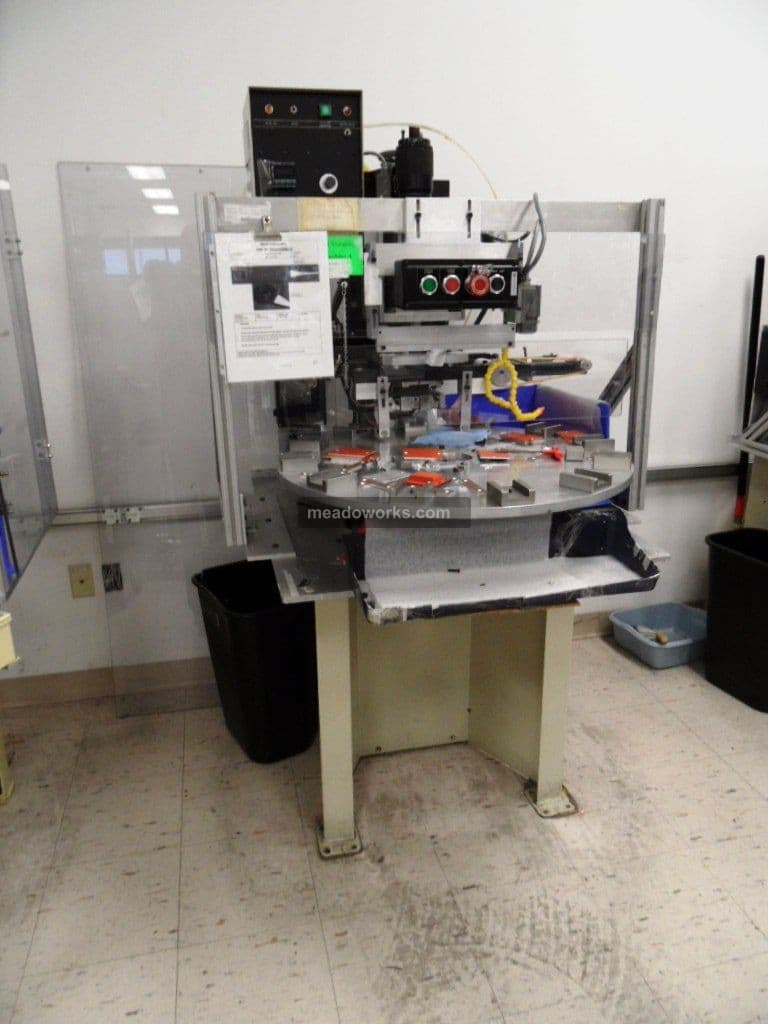 SOLD
SOLDKensol/Franklin KF500-P/C 3x6
USA
 SOLD
SOLDKensol/Franklin KF500
USA
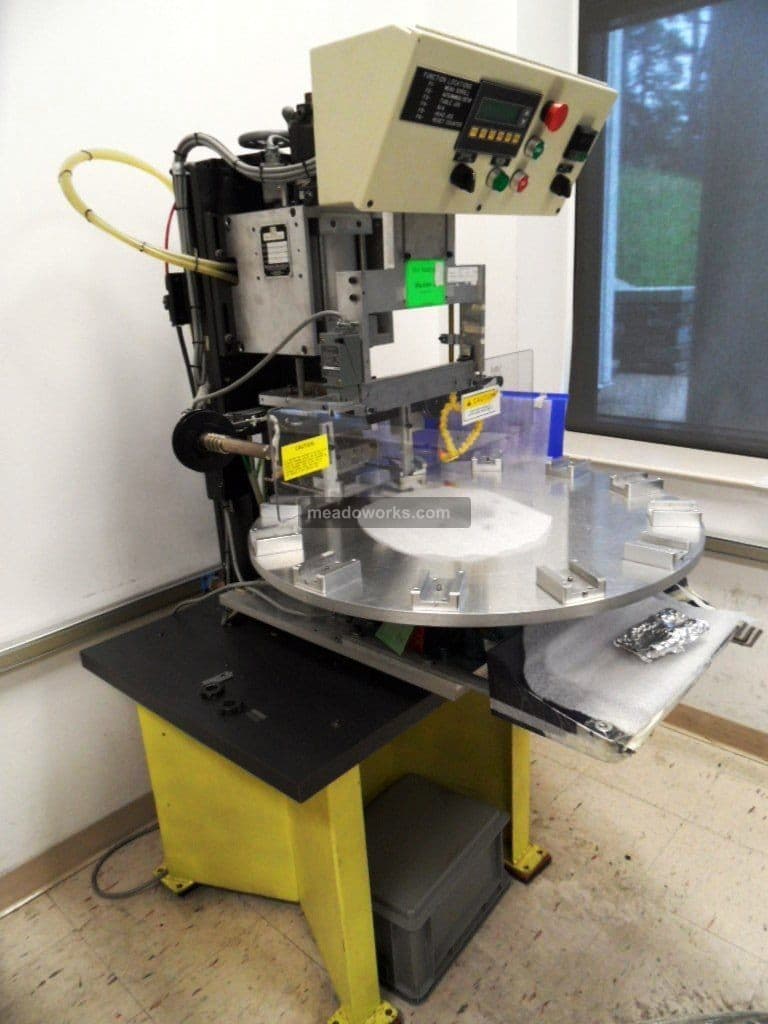 SOLD
SOLDKensol/Franklin KF500 A
USA
 SOLD
SOLDKensol/Franklin KF550 D
USA
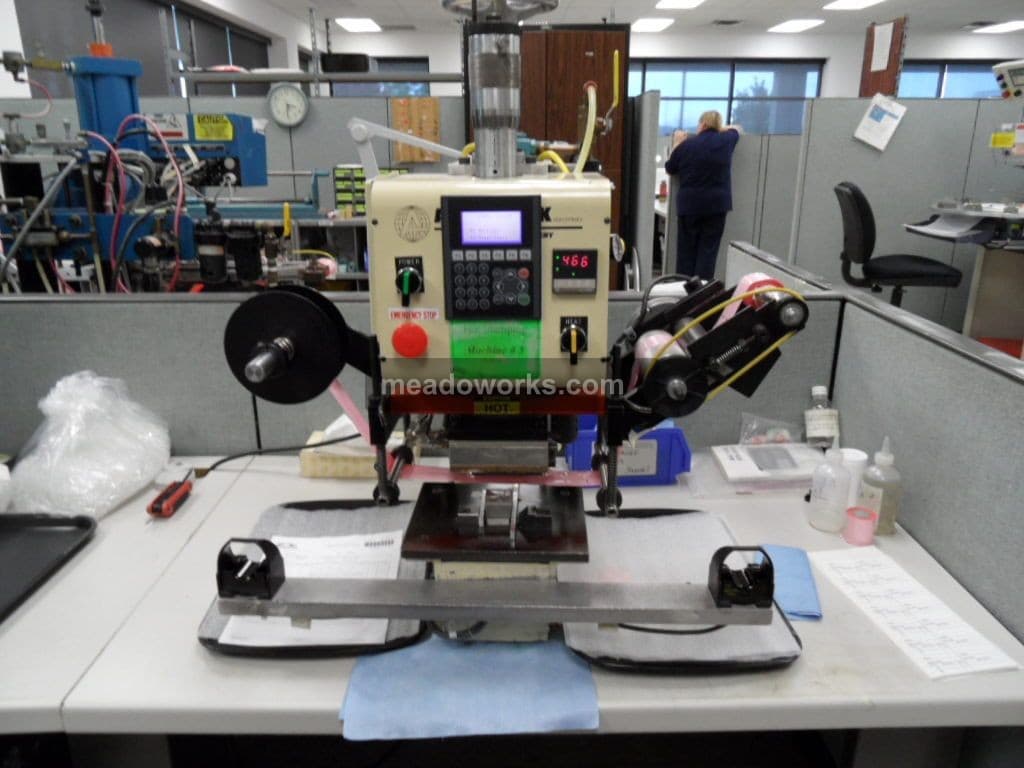 SOLD
SOLDAcromark 520-20
USA
Looking for Something Specific?
Most of our inventory sells before we can list it online. If you need a specific brand, model, or specification, tell us what you need—we have access to unlisted equipment and machines coming in from plant closures.
Looking to Sell?
Meadoworks is an active cash buyer of used industrial equipment. Get a free valuation from our AMEA-certified appraisers.
About Used Hot Stamping Machines
Hot stamping presses a heated die against a foil so the foil transfers onto the part. There is no ink. The die, the temperature, the pressure and the dwell do the work. It marks a plastic housing, a book cover or a part that wants a metallic patch. It is not a pad printer, and it is not a laser marker. The foil index has to pull a fresh patch for every cycle. A die that is the wrong temperature will stick, or it will leave a weak transfer you can scratch off.
Head size is the image area the machine can heat and press flat. A large head on a small image wastes heat and foil. A small head cannot stamp a logo that does not fit. Vertical presses stamp down. Roll-on heads roll the die across a longer image or a gentle curve. Those are different machines. Temperature is often in a band around 250 to 400 F, and it has to be even across the die. A head that is hot in the center and cold at the edge will transfer half the mark. Dwell and pressure have to be repeatable. A ram that bounces will blur the image.
Foil feed, the clutch and the sensor that indexes the foil are the wear. A feed that slips wastes foil or double-strikes. The die itself is tooling, cut to the art, and the last owner's die is not your art. Silicone rubber on the nest supports the part. A nest that is gone is a stamp that crushes the housing. Heaters and a thermocouple have to read the head, not a wish.
A used hot stamping press should be brought up to temperature and stamped on a scrap, even with the old die, so you can see transfer and release. Confirm head size, vertical or roll-on, and whether a die and a nest are included. Match the image to the head. A pad printer in the same decorating shop uses ink and a plate. This machine uses foil and heat. Do not buy one to do the other's job.
How to Choose a Used Hot Stamping Machine
Foil and a Die, Not a Pad
If the mark is foil, metallic or pigment, transferred by heat, you are in the right place. If the mark is ink from an etched plate, you want a pad printer. The motions are both a decorating press and the consumable is different.
Kensol/Franklin is the name in this range. Temperature, dwell, and die size still have to fit the part. A cold cycle does not prove a transfer.
Heat, Dwell, and Even Pressure
The die has to reach temperature across the image. Dwell has to be long enough for the foil to release and short enough not to damage the part. Pressure has to be even, which is a head that is square and a fixture that does not rock.
Confirm vertical press or roll-on before you plan the fixture. Foil feed should index a clean patch. A heater that hunts or a head that never gets hot is the repair, and it is the whole process.
Hot Stamping Machine Specs to Compare
| Spec | Why it matters |
|---|---|
| Process | Foil transfer is the job. A silicone pad and a plate are the other decorator. |
| Die size | A mark larger than the head will not transfer cleanly, if it fits at all. |
| Temperature and dwell | Those two settings, plus pressure, are the process. A cold ram is not stamping. |
| Head motion | The fixture and the die mount follow the motion. They are not the same machine. |
| Foil feed | A feed that slips restamps a spent patch and looks like a bad die. |
| Stroke and throat | A part that does not fit under the head will not be saved by more heat. |
Process
Foil transfer is the job. A silicone pad and a plate are the other decorator.
Die size
A mark larger than the head will not transfer cleanly, if it fits at all.
Temperature and dwell
Those two settings, plus pressure, are the process. A cold ram is not stamping.
Head motion
The fixture and the die mount follow the motion. They are not the same machine.
Foil feed
A feed that slips restamps a spent patch and looks like a bad die.
Stroke and throat
A part that does not fit under the head will not be saved by more heat.
What to Inspect on a Used Hot Stamping Machine
Stamp your material hot
Bring the die to temperature and transfer foil. A cold cycle only proves the ram moves.
Read temperature across the die
A cold corner is a heater or a contact problem. The foil will show it as a miss.
Watch dwell and pressure
Even contact, long enough to release. A rocking fixture makes one edge hungry.
Index the foil
Each cycle should pull a fresh patch. Slip restamps foil that is already spent.
Identify vertical or roll-on
The head style changes the die and the fixture. Do not assume from a photo of a frame.
Fit the part under the head
Stroke and throat have to clear it. Measure with the real part, not with a flat card.
Keep dies with the press
The image is the die. A bare head is a press without the mark you think you bought.
Related Equipment
- Printing & Decorating
Parent group for pad printing and foil together
- Pad Printing
Ink and a silicone pad, not foil
- Marking & Engraving
A laser mark when the image should not be foil
Hot Stamping Machines Brands We've Sold
Common Applications
Frequently Asked Questions
How does foil transfer on a hot stamping press?
A heated die presses the foil against the part, the coating releases, and the carrier web indexes away. Temperature, pressure, and dwell are the three settings, and all three have to be in range for your resin. A cold die will not transfer. Too much heat or dwell marks the plastic. The die is the artwork, so a different logo is a different die. Kensol/Franklin machines here are that kind of press. Ink is not involved, which is the simplest way to tell this process from a pad.
What temperature and dwell should I confirm for hot stamping?
Whatever releases your foil on your material without damaging the part, proven by a hot stamp rather than by a number in a brochure. The heater has to hold that temperature across the die, not only at one corner. Dwell is the time under pressure, long enough to release and short enough to leave the surface intact. Ask to see both adjusted and then look at the part. A thermostat that hunts will appear as a transfer that changes from cycle to cycle. That test is the specification.
How is hot stamping different from a pad printer?
Hot stamping is foil and heat. A pad printer is ink, an etched plate, and a silicone pad, with no foil and no die temperature. They both decorate a part and they do not share consumables or artwork. A metallic foil look is a reason to wait. A multicolor ink logo is a reason to open the pad group. Buying one because the other was sold mixes two cells.
What die size matters on a hot stamping machine?
The image has to fit the head that can be heated and pressed evenly. A die larger than the heater will be cold at the edges and the foil will miss. Stroke and throat still have to clear the part under that die. Measure the mark you need and the head you are shown. Roll-on equipment covers length differently from a vertical press, so identify the motion before you compare die area.
What should I check on the heater of a hot stamping press?
That it reaches temperature and holds it across the die while you stamp. A dead zone, a heater that never climbs, or a control that will not display a stable number is the repair that stops production. Do this hot, on your material. Look at the foil feed in the same visit, because a heater that works and a feed that slips still makes a bad mark. Electrical connections at the head take heat and flex, so include them. A cold ram that 'goes down' is not a working decorator.
Can hot stamping mark a part that would otherwise be inked?
Only if you accept foil instead of ink. The image can be a logo on the same housing, and the look will be a hot transfer, not a wet print. If the specification is ink, multiple colors, or a plate-and-pad process, this is the wrong machine. If the specification is metallic or pigment foil, a pad printer is the wrong machine. Decide the consumable first. Then match head size, heat, and dwell.
