Used Pad Printers for Sale
See all 2 Printing & Decorating →
Nothing is listed right now — these are machines we've recently sold. or tell us what you need.
Recently sold
 SOLD
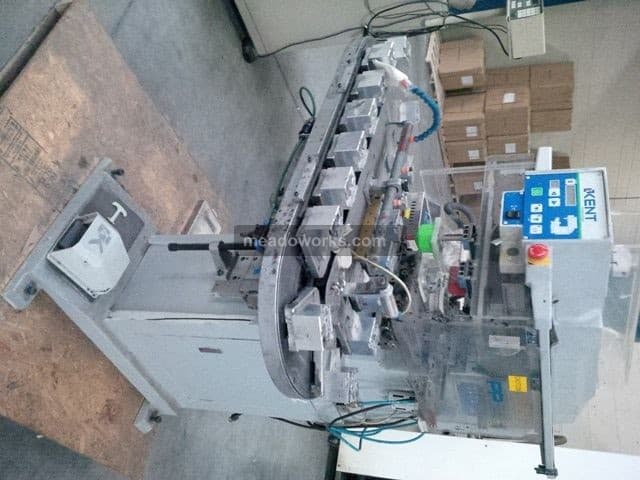
SOLD2001 Kent PP-150
USA
 SOLD
SOLD2000 Technical Industrial Co. TIC 401SC
USA
 SOLD
SOLD2000 Technical Industrial Co. TIC 401SC
USA
 SOLD
SOLD1999 Kent PP-150E
USA
 SOLD
SOLDTrans Tech Carousel 120
USA
 SOLD
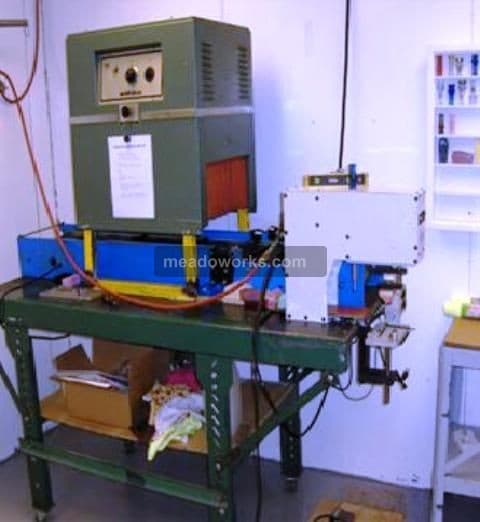
SOLDSMI SM35
USA
 SOLD
SOLD1999 Kent PP-150E Pad Printer
USA
 SOLD
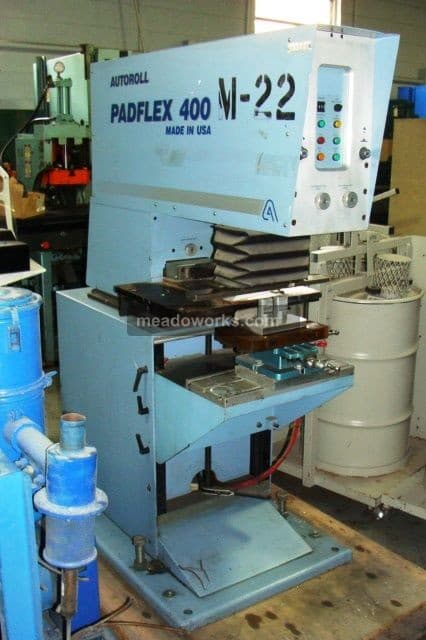
SOLDAutoroll Padflex 400
USA
Looking for Something Specific?
Most of our inventory sells before we can list it online. If you need a specific brand, model, or specification, tell us what you need—we have access to unlisted equipment and machines coming in from plant closures.
Looking to Sell?
Meadoworks is an active cash buyer of used industrial equipment. Get a free valuation from our AMEA-certified appraisers.
About Used Pad Printers
A pad printer transfers an image from an etched plate to a part with a silicone pad. The pad picks the ink out of the etching and sets it on a surface that can be curved, textured or recessed. Kent and Technical Industrial are names that repeat. It is not a sticker labeler, and it is not a hot stamp. Ink, a cliche and a pad are the consumables. The machine is the motion that repeats them.
Closed cup or an open inkwell is the doctoring. A closed cup seals the ink and doctors the plate in one ring, which is the usual production choice. An open well and a blade are older and they dry out faster. The cliche, steel or polymer, is etched to the art. A plate from the last job will not print your logo. The pad has to be larger than the image and soft enough to conform. A pad that is too hard or too small leaves a gap on a curve. Cycle rate and the number of colors, one plate or several, set whether the frame can do the part. A two-color machine is two plates and a registration between them, not a setting on a one-color head.
The nest has to put the part under the pad in the same place every time. A nest that is missing is a printer that prints the fixture. Controls that store a stroke and a delay are what keep a thin ink from blotting. Solvent and ink are a ventilation question even on a small bench unit.
A used pad printer should be cycled with a plate and a pad, even if the art is not yours, so you can see the pickup and the release. Confirm the number of colors, cup or open well, and whether plates, pads and a nest are included. Match the image size to the pad and the cliche, then match the part shape to a pad that can reach it. A flat label on a bottle is a different process. This one is for a print a label cannot wrap.
How to Choose a Used Pad Printer
Cup or Open Well
A closed cup keeps the ink covered, doctors the plate with the cup ring, and holds viscosity longer. An open well is a flood and a blade, more exposure to air, and a way to run an image the cup diameter will not cover.
Image size is the practical split. A cup is limited by the cup. An open well can be wider and asks more of the operator. Either way the plate is the art and the pad is the transfer.
Pad, Colors, and a Fixture
Hardness and shape of the silicone pad have to match the part. A soft pad conforms. A harder pad holds a finer detail and lasts longer. The pad should be larger than the image.
Count the colors the frame can actually run. Then fixture the part. Listings here are from completed sales, so a sold tag means you are shopping the next machine of this type, not assuming that cabinet is still on the floor.
Pad Printer Specs to Compare
| Spec | Why it matters |
|---|---|
| Ink system | The cup limits image size and stabilizes ink. The open well does the opposite trade. |
| Image and plate | The plate is the picture. The pad only carries what the plate holds. |
| Pad | A pad that is too small or too hard for the contour will smear or miss. |
| Colors | A one-color machine will not become four colors because you own four inks. |
| Fixture | Location is the fixture. The slide cannot guess where the part is. |
| Sale status | A sold machine is a reference. The next pad printer is the one to ask about. |
Ink system
The cup limits image size and stabilizes ink. The open well does the opposite trade.
Image and plate
The plate is the picture. The pad only carries what the plate holds.
Pad
A pad that is too small or too hard for the contour will smear or miss.
Colors
A one-color machine will not become four colors because you own four inks.
Fixture
Location is the fixture. The slide cannot guess where the part is.
Sale status
A sold machine is a reference. The next pad printer is the one to ask about.
What to Inspect on a Used Pad Printer
Identify cup or open well
The ink system has to match the image size and the way you want to run solvent.
Print if a plate exists
Look at pickup and laydown on your part. A dry slide does not show a thin image.
Inspect the pad and the ring or blade
A glazed pad or a grooved cup ring will not doctor or transfer a clean print.
Count the color stations
The frame either has them or it does not. Ink inventory is not a station.
Repeat the slide
The print should land in the same place. Walk in the mechanism is a repair.
Check the fixture
Your part has to sit where the pad expects it. Bring the part, not only the art file.
Read whether it has sold
Completed-sale listings may already be gone. Ask about the next machine rather than the tag alone.
Related Equipment
- Printing & Decorating
Category group that mixes every decorator
- Hot Stamping
Foil and a heated die, not an ink pad
- Marking & Engraving
A laser mark when the image should not be ink
Pad Printers Brands We've Sold
Common Applications
Frequently Asked Questions
What is the difference between a closed cup and an open well on a pad printer?
A closed cup seals the ink against the plate and the cup ring doctors the image in one pass, so viscosity stays put longer and the image is limited by the cup. An open well floods the plate and a blade wipes it, which can cover a wider image and exposes the ink to air. Solvent leaves an open well faster, so the operator adjusts more often. Pick the cup for a smaller, steadier image. Pick the well when the art does not fit a cup.
How do I match the pad to a pad printer job?
Shape and hardness, and a pad larger than the image. A softer pad conforms to a contour. A harder pad holds finer detail and survives longer. The wrong pad smears, misses the edge of the art, or distorts the print when it wraps. Pads are consumable and they should be with the machine or planned as a purchase. Ask for a print on your part, not on a flat sample card, if the real surface is not flat.
Why might a pad printer listing already be marked sold?
Because this chip is built from completed sales. The machines you see may already have left, and they remain useful as the specification of what this group is. A look for a pad printer for sale should still start here rather than on the general printing category, which mixes every decorator. Ask about the next machine of this type instead of assuming the photographed cabinet is on the floor. Kent and Technical Industrial are the names those sales have carried.
What does the plate decide on a pad printer?
The image. The etched plate, or cliche, holds the ink the pad will pick up, so art size, depth, and material of the plate have to fit the machine and the ink. A cup system needs a plate the cup can cover. An open well can use a larger plate and a blade. A pad cannot invent detail that is not in the etch. If the sale includes plates, see that they are your art or accept that new plates are part of starting.
How many colors can a pad printer run?
As many as the frame has stations for, each station a plate and a pad. A single-color machine stays single-color. Extra ink in a cabinet does not add a head. Look at the machine and count. Registration between colors depends on the fixture and the slide repeating, so a two-color frame with a loose slide will not hold a tight logo. If you need one color, do not pay attention to empty stations. If you need four, do not hope a one-up machine will grow them.
Where should a pad printer for sale look start?
On this group. The broader printing category mixes hot stamping and other decorators, and it is the weaker answer when the machine you want is a pad and an ink plate. Hot stamping is foil and a heated die. This is ink and silicone. Read cup versus open well, then the image size, then whether the listing is already sold. Pad printing is the same process under a longer name. The listing title to recognize is a pad printer. Start here and you will not sort foil presses by accident.
