Used Vertical Machining Centers (VMC) for Sale
All used machining centers (34) →
See all 34 Machining Centers →
Recently sold
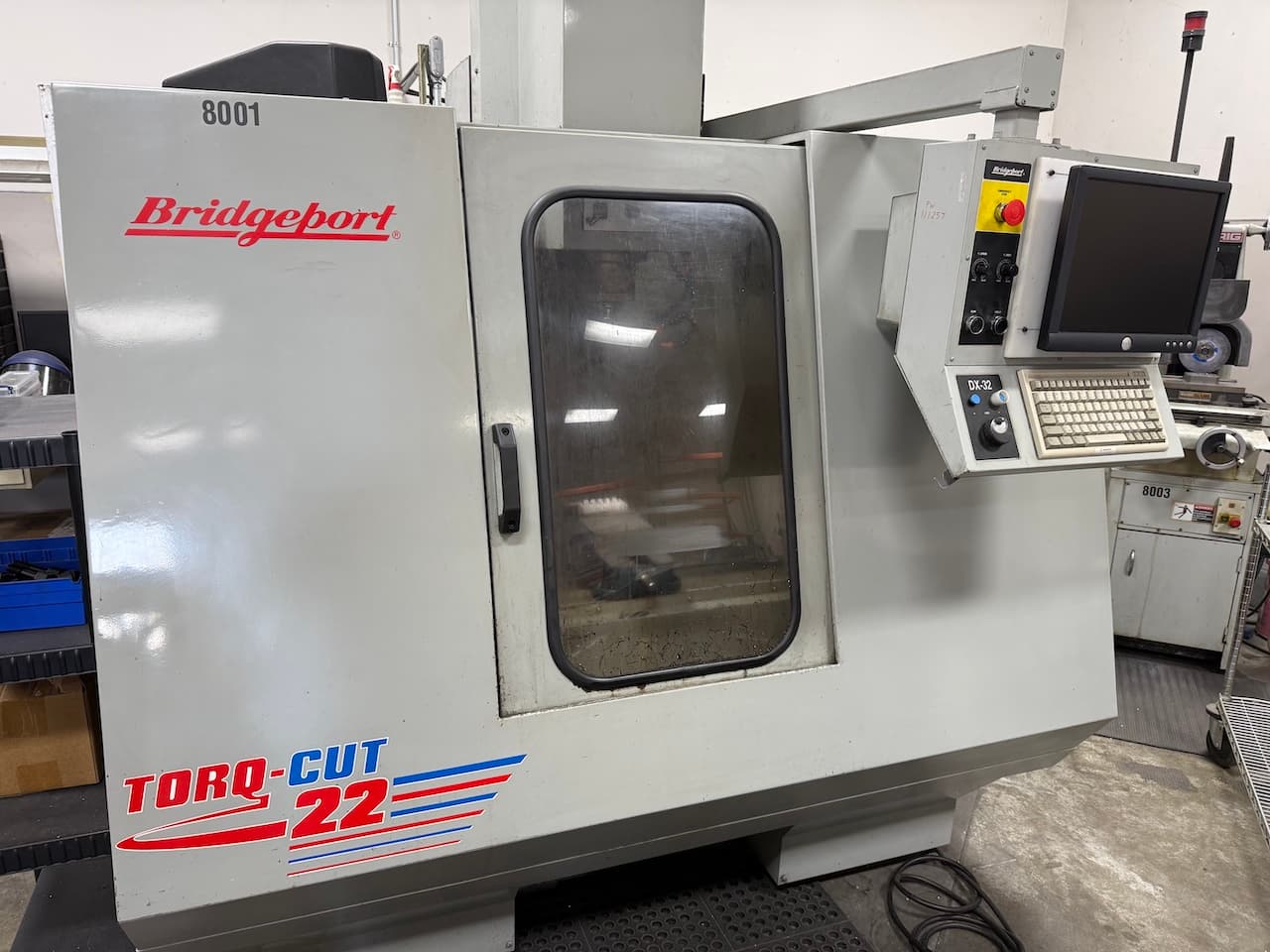 SOLD
Item #6469
Bridgeport CNC Vertical Machining Center
USA
 SOLD
Item #5715
Hurco - VMX42
USA
 SOLD
Item #5825
Haas VF-2DTR CNC Vertical Machining Center
Mexico
 SOLD
Item #5828
Haas VF-2DTRHE CNC Vertical Machining Center
Mexico
 SOLD
Item #5826
Haas VF-2DTR CNC Vertical Machining Center
Mexico
 SOLD
Item #5823
Haas VF-2TR CNC Vertical Machining Center
Mexico
 SOLD
Item #5824
Haas VF-2DTR CNC Vertical Machining Center
Mexico
 SOLD
Item #5827
Haas VF-2DTR CNC Vertical Machining Center
Mexico
 SOLD
Item #5822
Haas VF-2TR CNC Vertical Machining Center
Mexico
 SOLD
Item #5858
2022 Haas VF-2SS
USA
 SOLD
Item #6112
Milltronics Partner 7 Series H VMC
USA
 SOLD
Item #6111
Hurco VMX24
USA
 SOLD
Item #6108
2006 Fadal VMC 6030
USA
 SOLD
Item #6110
2006 Hurco VMX42
USA
 SOLD
Item #6109
2005 Fadal VMC 6030 HT
USA
 SOLD
Item #6227
1998 Mori Seiki SV-5000 CNC Vertical Machining Center
USA
 SOLD
Item #6229
2006 Leadwell MV-40 CNC Vertical Machining Center
USA
 SOLD
Item #6232
2005 Mori Seiki Duracenter 5 CNC Vertical Machining Center
USA
 SOLD
Item #6231
2006 Mori Seiki Duracenter 5 CNC Vertical Machining Center
USA
 SOLD
Item #6222
2000 Fadal VMC 3016L CNC Vertical Machining Center
USA
 SOLD
Item #6113
2008 Haas Mini Mill
USA
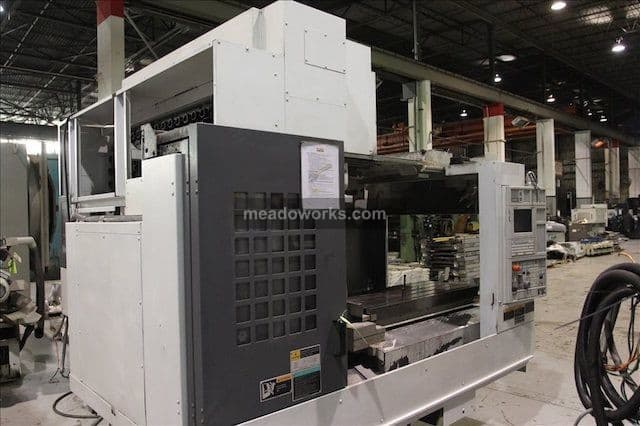 SOLD
Item #4672
2011 Mori Seiki NV5000 1B/40
USA
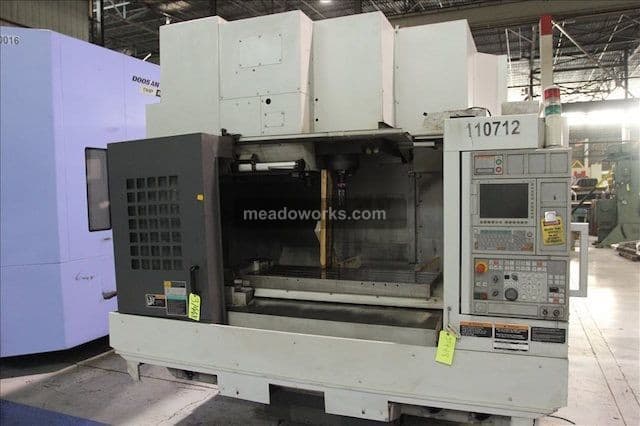 SOLD
Item #4673
2011 Mori Seiki NV5000 1B/50
USA
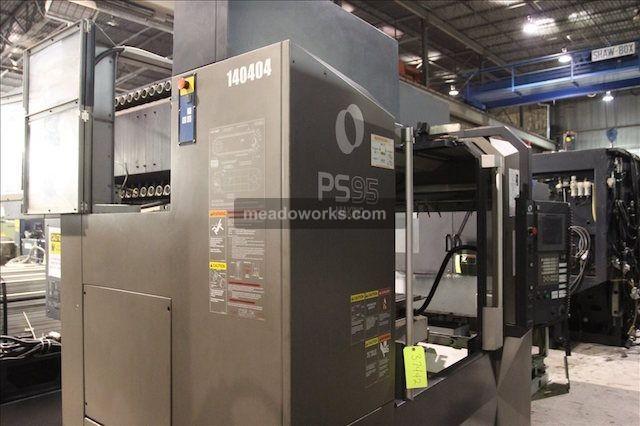 SOLD
Item #4677
2012 Makino PS95
USA
Vertical Machining Centers (VMC) by the numbers
From our own catalog: machines listed now and machines we have sold. Updated every few minutes.
Our track record
39 machines sold · 11 makes · model years 1986–2022 · 12 sold at our own auctions
By brand
| Brand | In stock now | Sold by Meadoworks | Model years |
|---|---|---|---|
| Haas | 7 | 11 | 1995–2023 |
| Milltronics | 4 | 1 | 2006–2015 |
| Doosan | 4 | 0 | 2008–2019 |
| Hurco | 2 | 5 | 1994–2011 |
| DMG Mori | 2 | 0 | 2011–2018 |
| Mori Seiki | 1 | 6 | 1998–2011 |
| Bridgeport | 1 | 1 | — |
| Daewoo | 1 | 0 | 2001 |
| Datron | 1 | 0 | — |
| Fryer | 1 | 0 | — |
Looking for Something Specific?
Most of our inventory sells before we can list it online. If you need a specific brand, model, or specification, tell us what you need—we have access to unlisted equipment and machines coming in from plant closures.
Browse Used VMCs by Brand
Browse Used VMCs by Country
Looking to Sell Your VMCs?
Meadoworks is an active cash buyer of used industrial equipment. Get a free valuation from our AMEA-certified appraisers.
About Used Vertical Machining Centers (VMC)
Vertical machining centers (VMCs) are the most popular CNC milling machines, featuring a vertically oriented spindle. VMCs are versatile, accessible, and ideal for 3-axis machining of prismatic parts, mold cavities, and general-purpose work. Their open design provides easy access for part loading and visual monitoring of operations.
Used VMCs are compared by X/Y/Z travels, table size and load, spindle taper (CAT40/BT40 on most VMCs, CAT50 on heavy-duty machines), spindle speed and power, and tool-changer capacity. A 40-taper VMC with 20–30 tools and 10,000–12,000 RPM covers most job-shop work; high-speed spindles (15,000–20,000+ RPM) suit aluminum and mold work, while geared 50-taper spindles suit heavy steel cutting.
When buying a used VMC, check spindle runout and bearing noise, way and ballscrew wear (backlash), the tool changer, coolant and chip handling, and the control generation. A 4th-axis rotary table or trunnion adds multi-side and 3+2 capability to a 3-axis VMC for much less than a full 5-axis machine.
On a vertical machining center the spindle points down, so the operator can see the cut and a crane can set a plate on the table. Through-spindle coolant and a chip conveyor are the options that turn a toolroom machine into a production machine. Coolant through the tool clears deep holes and taps. A conveyor keeps chips off the ways during a long aluminum cycle. Neither option repairs a tired spindle, and a machine without them can still mill open faces if flood coolant reaches the cutter.
A used vertical machining center is judged on the spindle, the ballscrews and the control, then on those options. Ask whether the drawbar still grips a pull stud. Weak springs let a tool slip under load, and the symptom looks like a poor finish rather than a clamp. Table load has to cover the fixture plus the part, not only the travels on the brochure. Match the electrical service before the truck is booked. A 40-taper machine that spent its life in aluminum is a different spindle from one that hogged steel dies. The alarm history and the sheet metal around the head are how you tell them apart.
Haas, Fadal, Hurco, Mori Seiki, Makino and OKK vertical machines are all in the Meadoworks sales record.
How to Choose a Used Vertical Machining Center
How to Size a Vertical Machining Center
Match travels to the part plus the vise or fixture, with room for the tool to enter and leave. A machine whose brochure looks larger than the work will cost floor space and a longer way system you never use. Then match the taper to the holders you own. CAT40 and BT40 cover most job-shop cuts. CAT50 is for heavy roughing and a second set of holders.
Spindle speed follows the material. Aluminum and small tools want rpm. Steel roughing wants torque at lower speed, which is why a geared 50-taper spindle still has a place. Tool-changer capacity should hold the whole part family. Twenty to thirty tools is a normal magazine. If you swap tools by hand in the middle of a cycle, the magazine is too small.
By Size: Used VMC Price Ranges
Compact 40-taper machines, under 30 in of X travel: about $15,000–$50,000.
Mid-size machines, 30–50 in of X: about $25,000–$90,000.
Large and 50-taper machines, over 50 in of X: about $50,000–$180,000.
What moves the price: age and control generation, spindle hours and runout, through-spindle coolant, a chip conveyor, a 4th-axis rotary, probing and the tool holders included. These are typical used-market ranges, not a quote on any one machine. Call 800-323-0307 for a current price.
Vertical Machining Center Specs to Compare
| Spec | Typical range | Why it matters |
|---|---|---|
| X/Y/Z travels (in) | 20–50 in X on common VMCs | Travels must clear the part and the fixture, including the tool's approach, not just the finished print. |
| Table load (lb) | A heavy fixture plus the part can overload a small machine even when the travels look generous. | |
| Spindle taper | CAT40 or BT40; CAT50 for heavy cuts | The taper has to match the holders already in the drawer or you are buying a second set. |
| Spindle speed (rpm) | 8,000–15,000 on general VMCs | Higher speed helps aluminum and small tools. Steel roughing cares more about torque. |
| Tool capacity | 20–30 tools | The magazine has to hold the part family or someone changes tools by hand mid-cycle. |
| Control | Haas, Fanuc and similar controls decide who can program the machine on the first shift. |
X/Y/Z travels (in)
Typical range: 20–50 in X on common VMCs
Travels must clear the part and the fixture, including the tool's approach, not just the finished print.
Table load (lb)
A heavy fixture plus the part can overload a small machine even when the travels look generous.
Spindle taper
Typical range: CAT40 or BT40; CAT50 for heavy cuts
The taper has to match the holders already in the drawer or you are buying a second set.
Spindle speed (rpm)
Typical range: 8,000–15,000 on general VMCs
Higher speed helps aluminum and small tools. Steel roughing cares more about torque.
Tool capacity
Typical range: 20–30 tools
The magazine has to hold the part family or someone changes tools by hand mid-cycle.
Control
Haas, Fanuc and similar controls decide who can program the machine on the first shift.
What to Inspect on a Used Vertical Machining Center
Run the spindle through its range
Listen at low and high rpm and ask for spindle hours separately from power-on hours. A roar is bearings.
Check backlash on X, Y and Z
Use a dial indicator or the control screen. One loose axis is a ballscrew or a nut, not a lube reminder.
Cycle every tool pocket
Run the changer twice through the magazine. One pocket that alarms will stop a production job.
Test the drawbar
A tool that slips under load often means weak springs in the drawbar, not a dull cutter.
Read the alarm history
Crash and servo alarms stay in the control. Fresh paint around the head is a question, not a finish.
Inspect way covers and wipers
Torn covers let chips grind the ways. The cover is a small part. The way under it is not.
Confirm voltage and options
Match the electrical service, and write down a fourth axis, probing, through-spindle coolant and a chip conveyor.
Related Equipment
- Used CNC Mills & Machining Centers
Compare vertical, horizontal and 5-axis first
- Used Horizontal Machining Centers (HMC)
Pallets and chip flow when a VMC is the wrong shape
- Used 5-Axis Machining Centers
When a rotary on a 3-axis VMC cannot reach
Related CNC Mills & Machining Centers
Horizontal Machining Centers (HMC)
Horizontal machining centers (HMCs) feature a horizontally oriented spindle and are designed for high-volume production and 4-axis machining.
5-Axis Machining Centers
5-axis machining centers add two rotary axes to standard 3-axis milling, enabling machining of complex contoured surfaces and undercuts in single setups.
Drilling & Tapping Centers
Drilling and tapping centers are high-speed CNC machines optimized for hole-making operations.
CNC Routers
CNC routers are gantry-style machining centers built for cutting, drilling, and shaping sheet materials — wood, plastics, composites, foam, and non-ferrous metals like aluminum.
All CNC Machines
Browse the full used CNC machine inventory — machining centers, lathes, EDM, and more.
Top Brands for Used Vertical Machining Centers (VMC)
Haas
US builder of vertical machining centers with its own control.
Hurco
Indianapolis builder known for the conversational WinMax control.
Mori Seiki
Japanese machining centers, later part of DMG Mori.
Fadal
American vertical machining centers with a large installed base.
Doosan
Korean builder of machining centers, now sold as DN Solutions.
Bridgeport
American mill name, also on Hardinge-built vertical machines.
Milltronics
US builder of conversational machining centers for job shops.
OKK
Japanese builder of rigid vertical machining centers.
Common Applications
Frequently Asked Questions
What is a vertical machining center used for?
A vertical machining center mills, drills, taps and bores with the spindle pointing down at the table. That layout fits plates, housings, mold bases and the mixed jobs a shop sees in one week, because the operator can see the cut and a crane can set the part. Three axes cover most of that work. A rotary table adds sides without buying a 5-axis machine. Deep contours and undercuts are the point where a dedicated 5-axis machine starts to make sense.
What should I look for in a used VMC?
Run the spindle across its speed range and ask for spindle hours separately from the hours on the control. Check backlash on X, Y and Z, cycle the tool changer through every pocket, and read the alarm history for crashes. Confirm the taper matches your holders and that the drawbar still grips a pull stud. Way covers should be intact. Then name the control and decide if your crew can program it. Our inspection checklist goes through the same list in order.
What's the difference between a VMC and HMC?
A VMC points the spindle down. It is the simpler machine for vise work, short batches and parts you want to see. An HMC points the spindle sideways, usually with a pallet, so chips fall out of a bore and the next part can be fixtured while the spindle cuts. Horizontals take more floor and more fixture cost. They earn it on repeating multi-side parts. A job shop with mixed work usually starts vertical. A cell with a known part family can start horizontal.
What spindle taper should my VMC have?
CAT40 or BT40 covers most vertical work and keeps the holders you already own in play. CAT50 is for heavy roughing and larger cutters, and it means a different drawer of tooling. HSK appears on high-speed and 5-axis machines. Pick one taper and stay with it across the shop. A bargain machine in the wrong taper is a second tooling budget, and the holders do not interchange just because both are called 40 taper.
Can I add a 4th axis to a used VMC?
Often yes, if the control has the fourth-axis option and the cabinet is wired for it. A rotary table lets you mill several sides in one clamping and is much less machine than a full 5-axis center. Confirm the option before you buy the rotary. A control that was never enabled for a fourth axis is a software and wiring job, not a cable. If the surfaces need the tool to move while the part tilts, the rotary is the wrong answer.
Do I need through-spindle coolant on a vertical machining center?
You need it for deep holes, for taps that pack chips, and for cycles where nobody can stand at the door with a nozzle. Open milling, faces and most prototype plates run fine on flood coolant if it actually reaches the cutter. Adding through-spindle coolant later is straightforward on some builders and a rebuild on others. If the work is mostly drilled, treat the option as required. If the work is open milling, do not reject a sound spindle over a missing pump.
Related Resources
CNC Machine Inspection Checklist
Spindle, ballscrews and control, in the order that costs the most to get wrong.
Read GuideVMC vs HMC: Which CNC Machining Center Do You Need?
When a vertical machine is the right first spindle.
Read GuideHaas vs Mazak vs Okuma Comparison
How the three common controls differ for a job shop.
Read GuideLooking for Specific VMCs?
Can't find what you need? Contact our team with your requirements. We source equipment from facilities across North America.
