Used CO2 Lasers for Sale
3 results
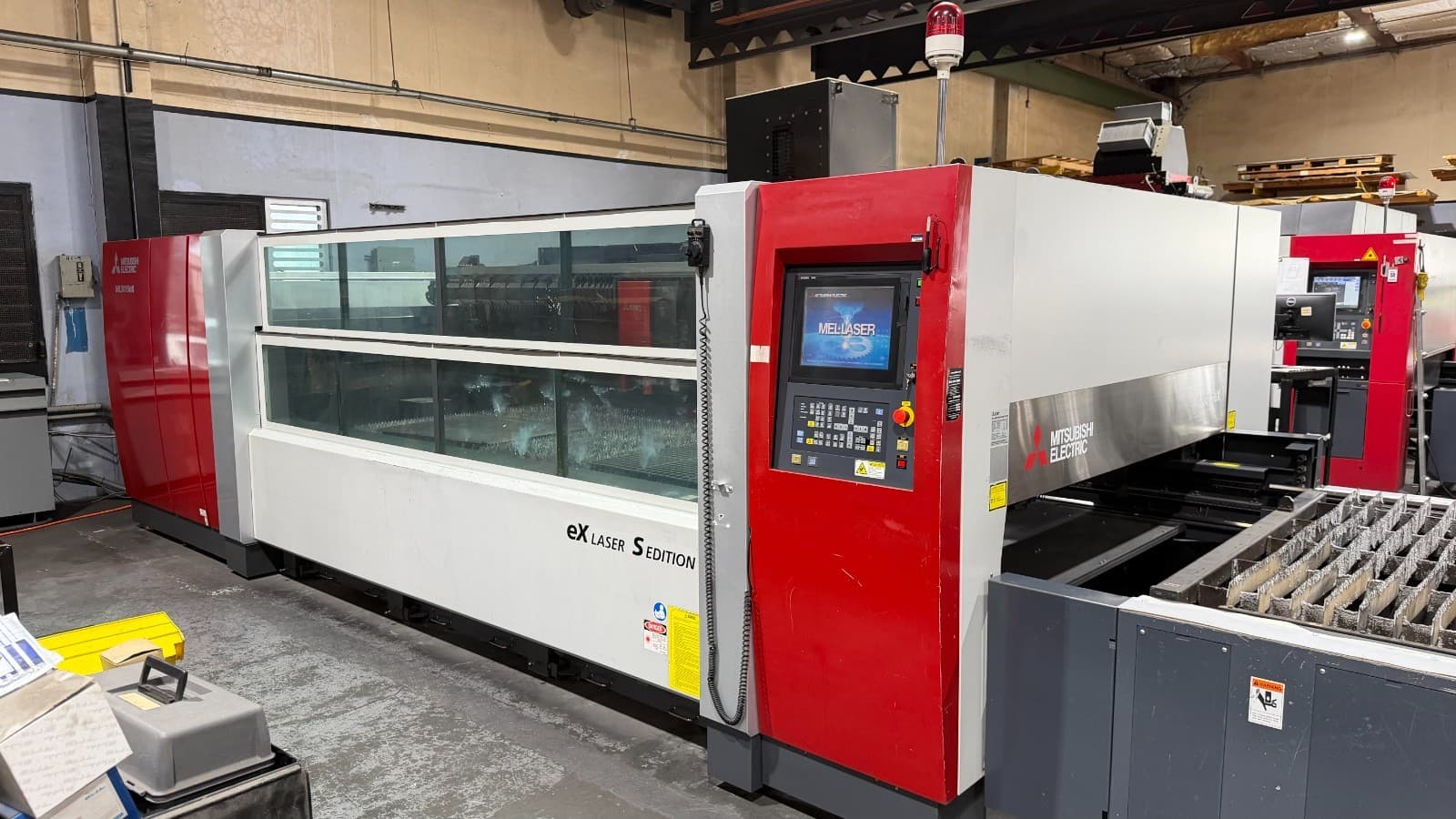
2014 Mitsubishi ML3015eX 2700 Watt CO2 Laser Cutter
USA

Rofin DC 030 CO2 Laser Cutting System
USA
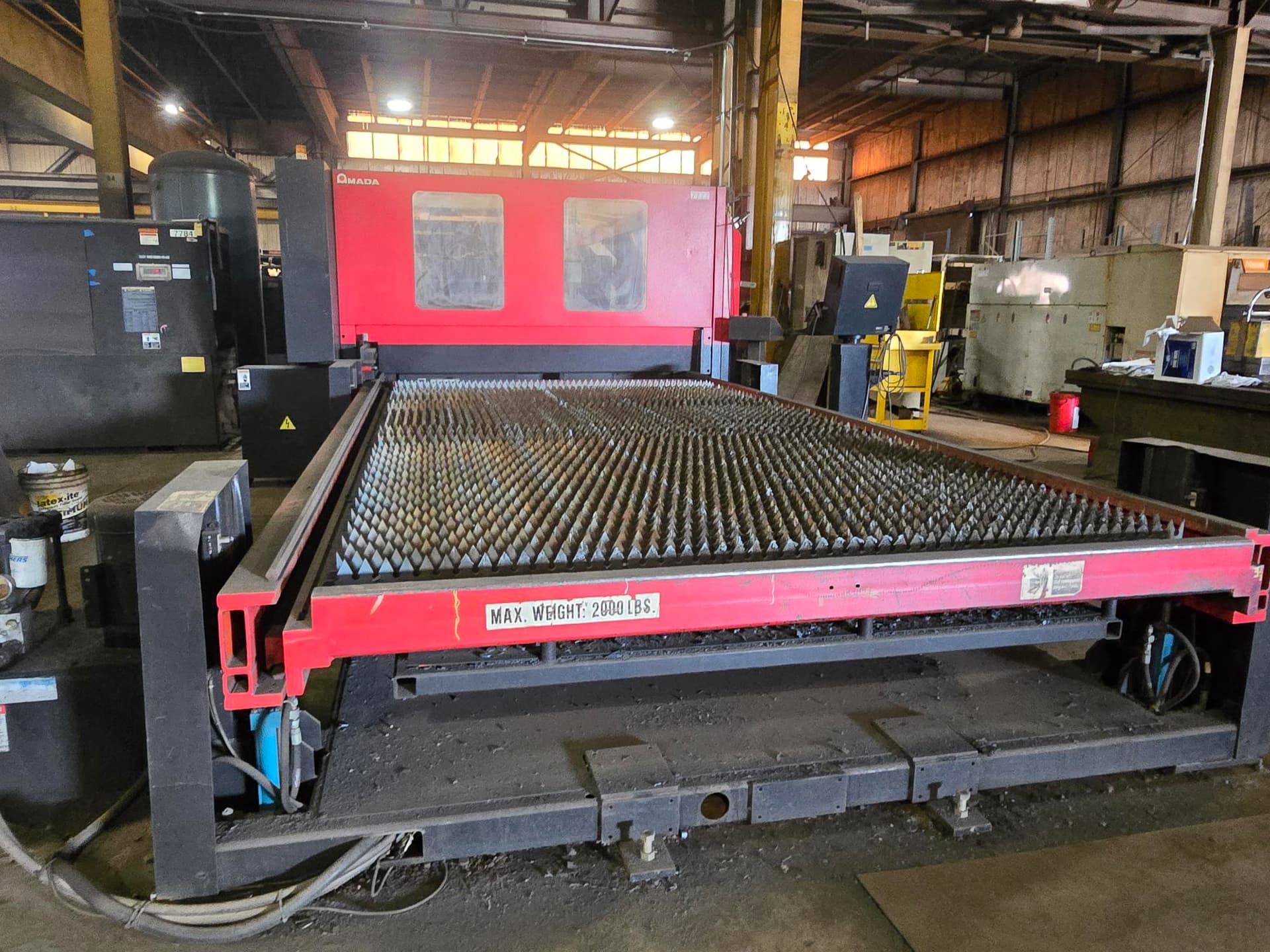
Amada FO-4020NT CO2 Laser Cutter, 72 x 144
USA
Looking for Something Specific?
Most of our inventory sells before we can list it online. If you need a specific brand, model, or specification, tell us what you need—we have access to unlisted equipment and machines coming in from plant closures.
Looking to Sell?
Meadoworks is an active cash buyer of used industrial equipment. Get a free valuation from our AMEA-certified appraisers.
About Used CO2 Lasers
A CO2 laser cuts with a gas tube or a slab source, and the beam reaches the head through mirrors. That mirror path is the maintenance a fiber source does not have. Alignment, a dirty mirror or a failing tube reads as a cut that fades across the sheet. Hours on the tube or the slab are the life of the source. A resonator that is near the end of its rated hours is a replacement, not a bargain, because the tube is a large share of the machine.
Sheet size is the table. The pallet has to accept the blank you nest, and the head has to reach it with the mirrors still in adjustment. Assist gas, lens and nozzle are the same daily items as on any cutter, and the lens on a CO2 head is a consumable the fiber window does not exactly replace. Power, often from a fraction of a kilowatt on a light machine into several kilowatts on a plate cutter, has to match thickness. Thin gauge and nonmetal sheet are where many of these machines earned their keep. Thick plate is where a newer fiber source is usually the faster tool. Buy this one for the work it still cuts well.
Chiller water keeps the source alive. A chiller that is low, dirty or alarming will take the tube with it. Bellows and the mirror covers keep dust off the path. A crash that knocked the head is a realignment, and sometimes a bent gantry. The control has to still hold the cut parameters. A dead computer is a cutter you cannot program.
A used CO2 laser should be asked to cut your material, then you should look at the edge from one side of the table to the other. A fade is mirrors or a tired source. Read tube or slab hours, table size and chiller condition. Confirm the lens and nozzle are included. If the shop also has a fiber cutter, they are not interchangeable spare parts. Match the source to the thickness you run every week.
How to Choose a Used CO2 Laser
Resonator and Mirrors, Not the Fiber Essay
You are here because the beam is made in a gas resonator and folded with mirrors. Hours on that resonator, the laser gas supply, and whether the mirrors still align are the purchase. Fiber kilowatts and a protective window are the other group.
Thick mild steel is the job that still points some buyers at this source. Thin sheet at high speed more often points at fiber. Bed size is shared thinking. The maintenance list is not.
What a Cut Proves
A cut in your thickness shows mode, focus, and dross better than a resonator hour number alone. Look at the mirrors and the lens before you blame the tube. A dirty optic is a cleaning. A resonator that will not hold power is not.
Chiller temperature during that cut matters. So does assist gas, which still decides the edge. If you need a serial number etched on a part, leave for the marking group. This machine separates sheet.
CO2 Laser Specs to Compare
| Spec | Why it matters |
|---|---|
| Resonator | The resonator makes the beam. Hours and whether it still holds power are the source question. |
| Beam path | Alignment and clean optics decide whether the wattage at the tube arrives at the sheet. |
| Laser gas | No gas, no beam. Leaks and bottle logistics belong in the purchase. |
| Chiller | Overheating is a tube problem even when the tube itself is not yet dead. |
| Bed size | Source type does not change the fact that the blank has to fit. |
| Head optics | Everyday wear sits in the head and is separate from the resonator and the mirrors. |
Resonator
The resonator makes the beam. Hours and whether it still holds power are the source question.
Beam path
Alignment and clean optics decide whether the wattage at the tube arrives at the sheet.
Laser gas
No gas, no beam. Leaks and bottle logistics belong in the purchase.
Chiller
Overheating is a tube problem even when the tube itself is not yet dead.
Bed size
Source type does not change the fact that the blank has to fit.
Head optics
Everyday wear sits in the head and is separate from the resonator and the mirrors.
What to Inspect on a Used CO2 Laser
Cut your thickness
Look at focus, dross, and whether power holds through the part. A coupon from last year is not a test.
Inspect mirrors and the lens
Dirt and drift imitate a weak resonator. Clean optics are the first explanation to rule out.
Confirm laser gas
The supply, the regulators, and any leak at the fittings. This consumable does not exist on a fiber machine.
Run the chiller during the cut
Temperature should stay in range. A climbing chiller is a resonator risk, not a side note.
Read resonator hours
Get the counter, not a recollection. Pair it with the cut, because hours alone do not show mode.
Check the rack and the pallet
A worn drive will not be aligned away. Repeat a small feature and watch the pallet exchange if there is one.
Boot the control
Parameters should be recoverable. A dead library is a programming project on top of the optics.
Related Equipment
- Laser Cutters
Parent group for fiber, CO2, and marking
- Fiber Lasers
Solid-state sheet cutting without a mirror path
- Marking & Engraving
A mark on a part, not a cut through sheet
Common Applications
Frequently Asked Questions
What does the resonator do on a CO2 laser?
It makes the beam. Gas in that resonator, excited and cooled, is the source, and mirrors carry the beam to the head. Hours on the resonator and whether it still holds power are the first condition questions. A fiber machine does not have this part, which is why the groups are split. A cut tells you more than the hour counter alone, because mode and focus can be optics. Read the counter anyway. A resonator story without a number is not a specification.
Why do mirrors and beam alignment matter on a CO2 laser?
The wattage at the resonator is not the wattage at the sheet if a mirror is dirty or drifted. A soft cut, a poor pierce, or a beam that will not focus often starts in the path, not in a dead tube. Inspect and, if you know the procedure, clean before you condemn the source. The lens in the head is part of that path and is a normal wear item. Do not import the fiber checklist and call the visit done.
When does a CO2 laser still suit thick mild steel?
When the thickness and the edge you need line up with what this resonator can cut in oxygen, and the shop can support gas, mirrors, and the chiller. Thin sheet at high speed is where fiber usually wins the comparison, and this group will not re-argue that kilowatt essay. If your week is thick carbon steel and you already run this kind of source, stay and judge the resonator you are looking at. If your week is thin stainless with a bright edge, read the fiber group before you commit.
What laser gas and chiller does a CO2 laser need?
Laser gas is the consumable inside the source story, separate from the oxygen or nitrogen assist at the head. A leak or an empty supply means no beam. The chiller keeps the resonator in a temperature range, and a chiller that climbs during a short cut is how resonators get hurt. Confirm both during a test, not from a photo of the bottles. Assist gas still matters for the edge and is a third supply. Budget the utilities with the machine or the purchase is only a frame.
How should I test cut quality on a CO2 laser?
Use your thickness and your assist gas. Look at pierce, dross, and a feature small enough to show a focus or a motion problem. Check the mirrors and the lens before you decide the resonator is done. Watch the chiller at the same time. A bright sample cut years ago does not describe today's alignment. If the control will not open the old library, include that in the verdict. The beam path and the program are both part of whether the machine cuts tomorrow.
How is a CO2 laser different in beam path from a fiber cutter?
A CO2 laser creates the beam in a resonator and turns it with mirrors. A fiber cutter generates the beam in a fiber source and delivers it through fiber to the head, without that mirror path and without laser gas. Both can cut sheet, and both care about bed size and assist gas. The spare-parts list and the daily checks are not the same, so the groups are not the same. Marking is neither of these. It does not separate a blank from a sheet.
