Used Fiber Lasers for Sale
3 results
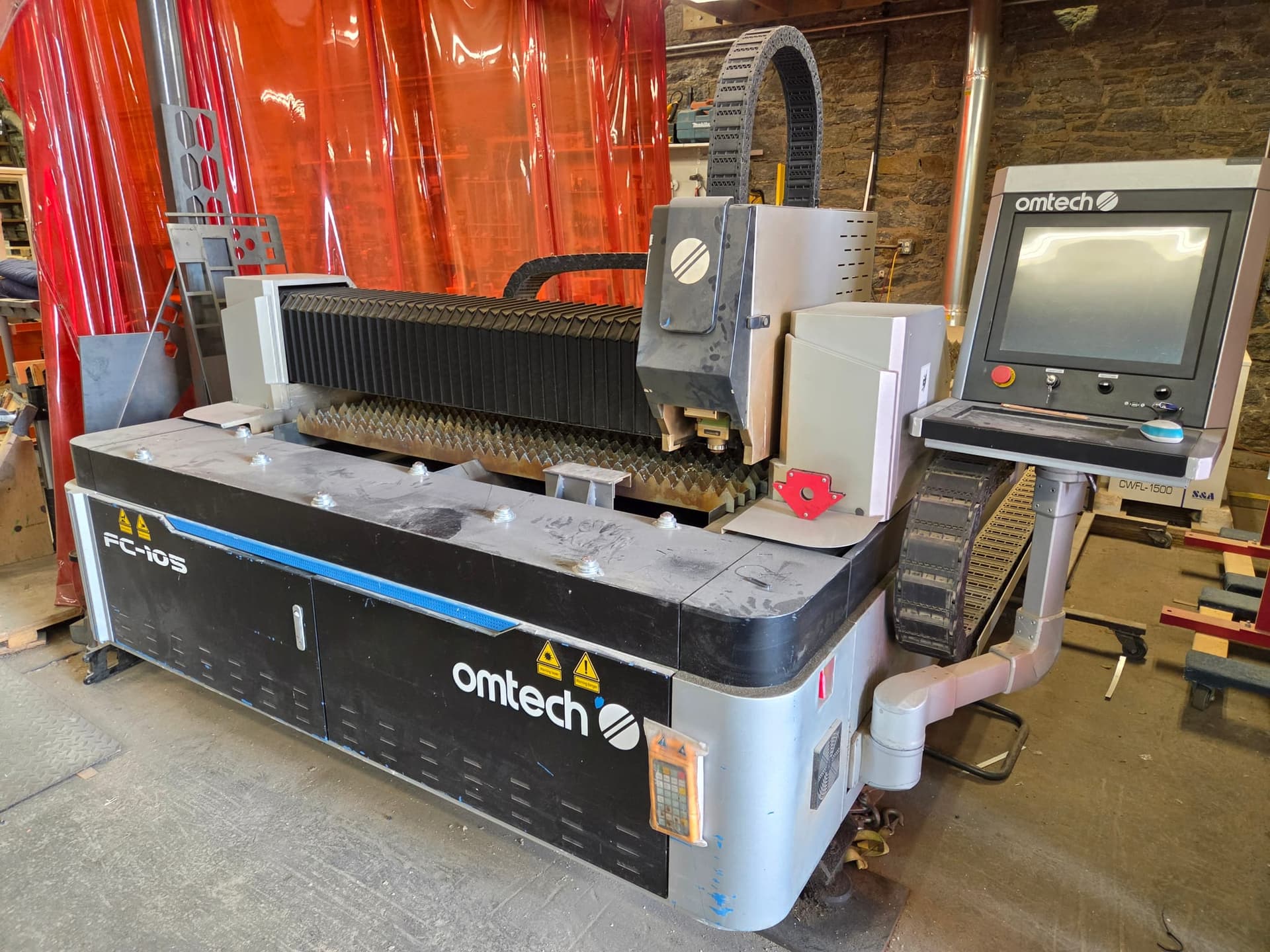
2023 OMTech FC-105 5x10 Fiber Laser Cutter, 2000W
USA

Yangli BL3015F-10 1000W CNC Fiber Laser Cutting Machine
Mexico
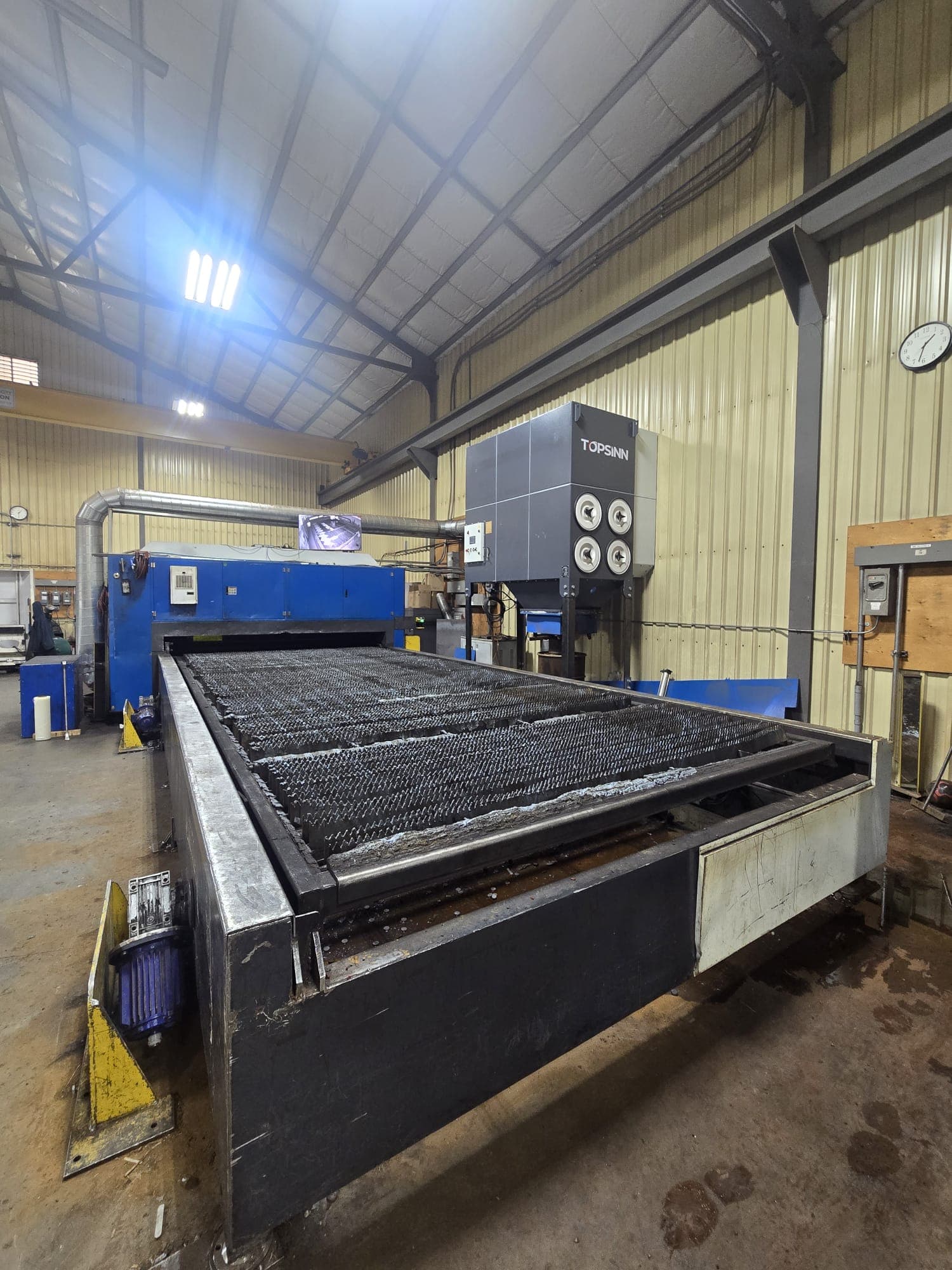
Accurl 12kW CNC Fiber Laser Cutting System with IPG Source
Canada
Looking for Something Specific?
Most of our inventory sells before we can list it online. If you need a specific brand, model, or specification, tell us what you need—we have access to unlisted equipment and machines coming in from plant closures.
Looking to Sell?
Meadoworks is an active cash buyer of used industrial equipment. Get a free valuation from our AMEA-certified appraisers.
About Used Fiber Lasers
A fiber laser cuts sheet metal with a solid-state source. The beam travels in a fiber, not in mirrors across a gantry, which is the practical difference from a CO2 cutter. Yangli is a name that repeats on these machines. Kilowatts decide how thick a sheet you can cut in a shift, and assist gas decides the edge. Oxygen on mild steel is fast and leaves an oxide edge. Nitrogen on stainless is cleaner and uses more gas. Clean dry air is a third choice on thinner sheet when the edge can accept it.
Table size has to fit the sheet you actually nest, often a 4-by-8 or a 5-by-10. A second pallet, when the machine has one, lets the operator load while the head cuts. It is an option, not a given. The fume path is not optional. A collector or a duct that cannot keep up will coat the protective window and the nozzle, and the cut will wander before the source is tired. Nozzle size, the window and the focus head are the daily consumables. The source itself is rated in hours. Read both the source hours and the power-on hours. They are not the same number.
Piercing, corner speed and a height sensor are what separate a cutter that holds a small hole from one that only slits a straight line. A machine that will not keep standoff will crash the nozzle. Servo drives and the rack or the ballscrews on a long axis wear in the middle of the most-used travel. Backlash there reads as a notch when the head reverses. Ask whether the control still has the cutting tables for your material.
A used fiber laser should be cut on your thickness, in your gas, not only homed. Watch a pierce and a corner. Look at the window. Confirm kilowatts, table size and whether a second pallet and a collector are in the sale. A CO2 machine in the same shop is a different source, with mirrors and a gas mix. Do not price them as the same cutter because both make a kerf.
How to Choose a Used Fiber Laser
Kilowatts for the Week, Not the Brochure
Match power to the thickness and the hours you actually run. A lower-kilowatt source is the right fiber machine for thin sheet. Stepping up buys pierce speed and thickness, and it also buys a larger electrical, gas, and cooling load.
Do not shop this group for a marking job or for a resonator tutorial. Marking is its own group. The CO2 group is the mirror-and-gas-resonator cutter. Wait when the source is fiber and the work is sheet.
Gas, Bed, and Hours
Oxygen, nitrogen, and clean dry air are different edges and different utility bills. Confirm the shop can supply the gas the process wants. Bed size has to swallow the sheet, and a shuttle is only a benefit if someone is waiting to load the other pallet.
Read source hours and chiller hours. A low-hour source on a neglected chiller is not a low-hour machine. Ask for a cut in your material before you compare badges. Yangli is the name in this range, and the cut still matters more than the badge.
Fiber Laser Specs to Compare
| Spec | Typical range | Why it matters |
|---|---|---|
| Source power | Power sets pierce time and thickness. Extra kilowatts you never use still need utilities. | |
| Bed size | Often a 5 by 10 foot sheet, larger for plate | The sheet has to fit. A bigger bed is a material-handling decision, not a decoration. |
| Assist gas | Gas changes edge color, dross, and what has to be welded or painted later. | |
| Source and chiller hours | The source is only as healthy as the cooling that has been keeping it in range. | |
| Head consumables | A scarred window imitates a weak source and is a cheaper fix when you catch it. | |
| Shuttle and extraction | A shuttle saves load time. Extraction keeps the optics and the room usable. |
Source power
Power sets pierce time and thickness. Extra kilowatts you never use still need utilities.
Bed size
Typical range: Often a 5 by 10 foot sheet, larger for plate
The sheet has to fit. A bigger bed is a material-handling decision, not a decoration.
Assist gas
Gas changes edge color, dross, and what has to be welded or painted later.
Source and chiller hours
The source is only as healthy as the cooling that has been keeping it in range.
Head consumables
A scarred window imitates a weak source and is a cheaper fix when you catch it.
Shuttle and extraction
A shuttle saves load time. Extraction keeps the optics and the room usable.
What to Inspect on a Used Fiber Laser
Cut two thicknesses
Use your weekly material. Watch pierce, dross, and whether focus holds through the nest.
Read the hour counters
Source hours and chiller hours. A story without a counter is not a number.
Inspect the window and nozzle
A pitted protective window will make a good source look weak. It is a small part and a big symptom.
Confirm the gas the edge needs
Oxygen, nitrogen, or air. Make sure the regulators and the supply match that choice.
Run the chiller
It should hold temperature. A source that overheats on a short cut is a cooling repair.
Check motion on a small hole
Repeatability appears in small contours. A loose rack will not be fixed by more kilowatts.
Back up the parameters
The control should boot, and someone should be able to show a copy of the cutting library.
Related Equipment
- Laser Cutters
Parent group before you choose fiber, CO2, or marking
- CO2 Lasers
Resonator sheet cutters with mirrors and laser gas
- Turret Punches
Punched holes and forms a fiber head will not make
Fiber Lasers Brands We've Sold
Common Applications
Frequently Asked Questions
What source power should I match to a fiber laser?
The thickness and the pace you run every week, not a single thick coupon. Lower kilowatts suit thin sheet. More kilowatts buy pierce speed and thickness, and they ask for more power, gas, and cooling. A fiber laser that is larger than the work still has to be fed and maintained at that size. Ask for cycle time on your material rather than a maximum-thickness slogan. The head, the gas, and the motion decide whether that kilowatt number appears in the part.
Which assist gas should I plan for a fiber laser?
Oxygen when you want speed on carbon steel and can live with an oxidized edge. Nitrogen when stainless or aluminum has to stay bright for weld or paint. Clean dry air is a thin-sheet option when the compressor and the dryer are actually up to the pressure. The gas is not a detail you add later. Regulators, purity, and supply have to exist on day one. A test cut in the gas you will use is the only cut that counts.
What bed size is typical for a fiber laser?
A five-by-ten foot sheet is the common fab bed, and larger tables appear when the work is plate. The sheet you buy has to fit, including how you load it. A shuttle pallet helps when someone can load the idle side while the head cuts, and it is wasted iron if the jobs are one-off. Bed size does not add kilowatts. Match the table to the material, then match power to the thickness. Extraction has to cover that same area or the optics pay for it.
What hours and chiller details matter on a fiber laser?
Source hours and chiller hours, read from the counters, not from memory. The source is only as healthy as the cooling that kept it in range. A low-hour source on a dead chiller is a repair. Confirm the chiller runs and holds temperature during a cut. Also look at the protective window, because a scarred window imitates a weak source and is the cheaper fix. Nozzle condition belongs in that same five minutes. Those parts tell you more than the paint on the enclosure.
How do I judge a test cut on a fiber laser?
Pierce time, dross, and a hole or a contour that repeats. Use two thicknesses you actually run, in the assist gas you will use. Measure a small feature so motion errors cannot hide. A bright edge in nitrogen and a fast edge in oxygen are different successes, so do not grade one with the other's rules. If the head loses focus or the chiller climbs during a short nest, believe that over a sample part cut last year. Bring your own material when you can.
Why is a fiber laser group separate from a CO2 sheet cutter?
The source and the maintenance are different. A fiber laser delivers the beam through fiber to the head. A CO2 machine makes the beam in a resonator and folds it with mirrors, and it consumes laser gas. Mixing those checklists makes both groups vague. Power, bed, and assist gas matter on both, and they are not the same essay. Shop this group for the fiber source. Shop the CO2 group for mirrors, resonator hours, and laser gas. Marking is a third machine and does not cut the sheet.
