Used Coil Feeds for Sale
Nothing is listed right now — these are machines we've recently sold. or tell us what you need.
Recently sold
 SOLD
Item #2493
2002 Oriimec LCC13HR MAX-MHS - Servo Coil Feed Line
USA
 SOLD
Item #2893
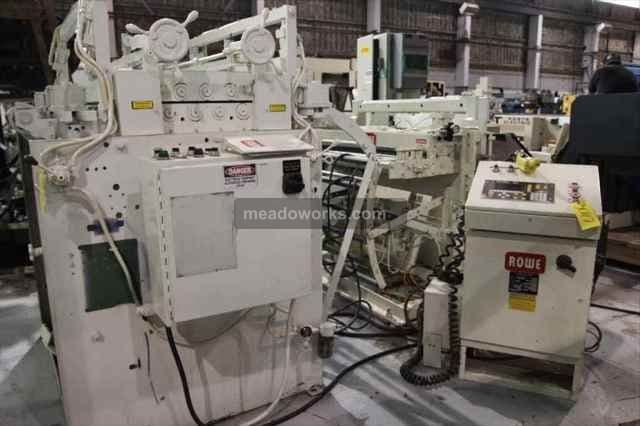
1995 Rowe International ROWE 20050-DSV Servo Coil Feed Line
USA
Looking for Something Specific?
Most of our inventory sells before we can list it online. If you need a specific brand, model, or specification, tell us what you need—we have access to unlisted equipment and machines coming in from plant closures.
Looking to Sell Your Coil Feeds?
Meadoworks is an active cash buyer of used industrial equipment. Get a free valuation from our AMEA-certified appraisers.
About Used Coil Feeds
Coil feed systems deliver strip material from a coil to a stamping press at precise increments synchronized to the press cycle. Feed types include servo roll feeds (most common), air feeds, and gripper feeds, each suited to different speed, accuracy, and material requirements. Modern servo feeds provide programmable feed lengths, acceleration profiles, and pilot release for high-speed progressive die stamping.
Key specifications include material width capacity, material thickness range, feed length (progression), feed accuracy, and maximum speed (feeds per minute). Complete coil feed lines include an uncoiler (decoiler), straightener/leveler, and feed unit working together as an integrated system.
Rowe and Oriimec servo coil feed lines have moved through Meadoworks. Contact us at 800-323-0307.
How to Choose a Used Coil Feed
Width, Thickness and Feed Length
Size a coil feed to the widest and thickest strip you run and the longest progression, then to the speed of the press. Air feeds suit narrow strip and short progressions; servo roll feeds program the feed length and pilot release and suit most progressive dies; gripper feeds handle heavy gauge.
A complete line pairs the feed with a reel or decoiler and a straightener, sized together for coil weight and width. Check that the feed's controls talk to your press and that the rolls and pilot release are in good shape.
By Size: Typical Used Coil Feeds Price Ranges
Air and mechanical feeds: about $2,000–$10,000.
Servo roll feeds up to about 24 in wide: about $10,000–$60,000.
Complete servo coil lines, 48–60 in wide: about $40,000–$200,000.
What moves the price — width and thickness capacity, servo or air drive, feed accuracy and speed, a combined straightener and reel, coil weight, the controls and press interface, and roll condition.
These are typical used-market ranges, not a quote on any one machine. For a current figure on a specific machine, request a quote or call 800-323-0307.
By brand
Rowe and Oriimec servo coil feed lines have moved through Meadoworks: a Rowe 20050-DSV line about 50 in wide and an Oriimec LCC13HR MAX-MHS line for 2.76 to 51.2 in wide strip.
Meadoworks track record
We have sold two servo coil feed lines, about 50 in wide, from Rowe International and Oriimec. Tell us your strip width, thickness and progression and we will look for a matching feed.
Coil Feed Specs to Compare
| Spec | Typical range | Why it matters |
|---|---|---|
| Material width | Often 6–60 in | Sets the widest strip the feed accepts. |
| Material thickness | Often 0.010–0.250 in | Heavy gauge needs a stronger feed. |
| Feed length | Often up to 24–100 in per stroke | Must cover the die's progression. |
| Feed accuracy | Often within a few thousandths of an inch | Holds pilots and part dimensions. |
| Coil weight | Often 2,000–20,000 lb on full lines | The reel must carry your coils. |
Material width
Typical range: Often 6–60 in
Sets the widest strip the feed accepts.
Material thickness
Typical range: Often 0.010–0.250 in
Heavy gauge needs a stronger feed.
Feed length
Typical range: Often up to 24–100 in per stroke
Must cover the die's progression.
Feed accuracy
Typical range: Often within a few thousandths of an inch
Holds pilots and part dimensions.
Coil weight
Typical range: Often 2,000–20,000 lb on full lines
The reel must carry your coils.
What to Inspect on a Used Coil Feed
Run a strip
Feed strip at your progression and speed and check accuracy.
Check the rolls
Look for wear, flats and scoring on the feed rolls.
Test pilot release
Confirm the rolls open and close on time.
Run the reel
Check the mandrel, brake and loop control.
Check the drives
Confirm the servo drives and motors run without faults.
Confirm the press interface
Make sure the feed signals match your press control.
Related Equipment
- Used Hydraulic Presses
Full tonnage anywhere in the stroke
- Used Hydraulic Gap Frame Presses
Open-throat presses for assembly and light forming
Types of Stamping Equipment
Common Applications
Frequently Asked Questions
What types of coil feeds are available?
The main coil feed types are servo roll feeds (most common, highest precision), air feeds (simple and reliable for shorter progressions), and gripper feeds (for heavy-gauge material). Servo roll feeds use servo motors to drive feed rolls with programmable feed lengths and acceleration profiles, making them the standard for modern progressive die stamping.
How much does a used servo coil feed cost?
Typical used ranges run about $2,000–$10,000 for air and mechanical feeds, about $10,000–$60,000 for servo roll feeds up to about 24 in wide, and about $40,000–$200,000 for complete servo coil lines 48 to 60 in wide with a reel and straightener. Width, thickness and controls move the price; call 800-323-0307 for a current figure.
What should I check on a used coil feed line?
Run a strip at your progression and speed and check feed accuracy. Look at the feed rolls for wear and flats, test the pilot release, and run the reel's mandrel, brake and loop control. Confirm the servo drives run without faults and that the feed signals match your press control.
What size coil feed do I need?
Match the widest and thickest strip you run and the longest progression in your dies, then the press speed. Check the coil weight the reel must carry and whether the straightener in the line handles your thickness. A feed sized just right for one die may be too narrow or too light for the next one.
Can I add a used servo feed to an older press?
Usually, yes. A servo feed needs a signal from the press to know when to feed and release, which can come from a cam switch or resolver added to an older press. Check the feed's control options and plan the mounting, the loop and the press interface before buying.
Related Resources
Need Help Finding the Right Equipment?
Contact our team with your specifications and we'll help you find the right machine.
