Used Hydraulic 4-Post Presses for Sale
Recently sold
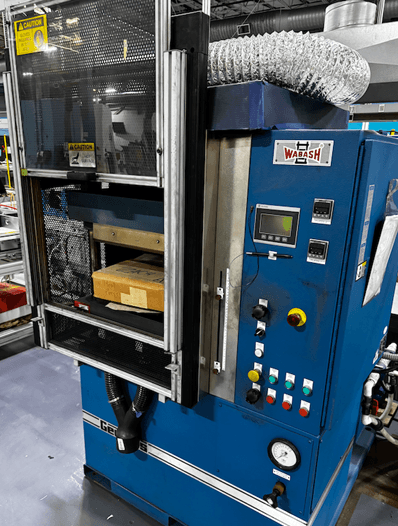 SOLD
Item #6291
Wabash MPI G50H-18-X 50-Ton Hydraulic Press
USA
 SOLD
Item #6220
Pacific PressFormer II 200 Ton Hydraulic Press
USA
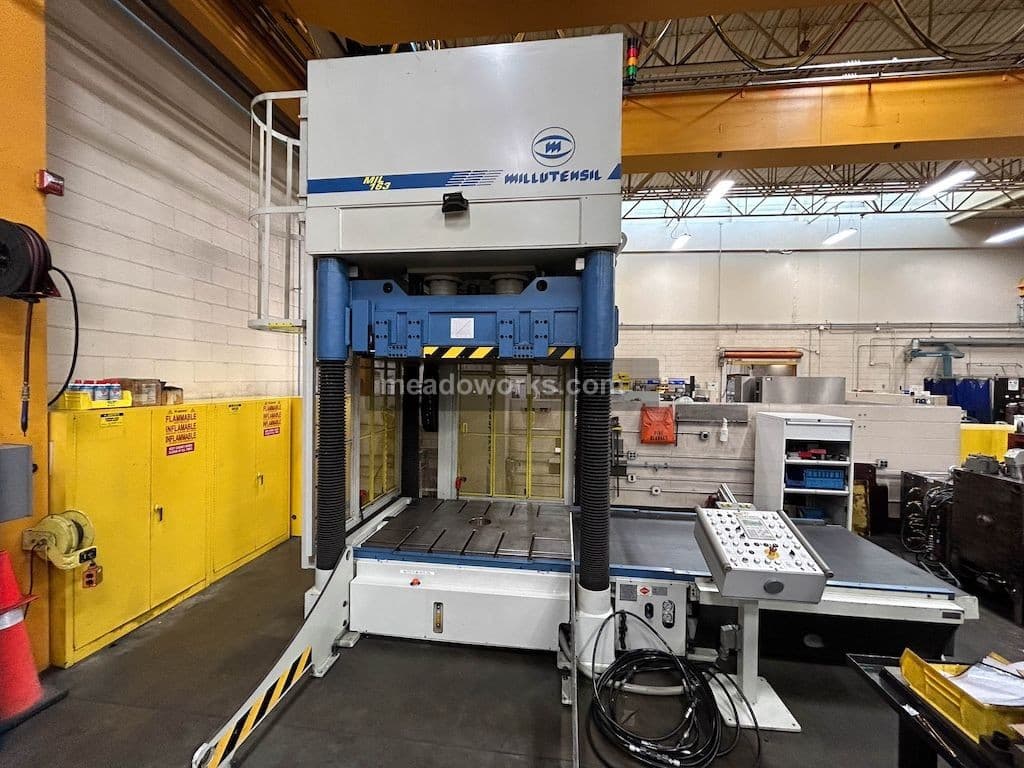 SOLD
Item #5502
2007 Millutensil MIL/163
USA
 SOLD
Item #3431
Neff Press H600-150M
USA
 SOLD
Item #3432
Neff Press 4D-400-84
USA
Looking for Something Specific?
Most of our inventory sells before we can list it online. If you need a specific brand, model, or specification, tell us what you need—we have access to unlisted equipment and machines coming in from plant closures.
Browse Used Hydraulic 4-Post Presses by Brand
Browse Used Hydraulic 4-Post Presses by Country
Looking to Sell Your Hydraulic 4-Post Presses?
Meadoworks is an active cash buyer of used industrial equipment. Get a free valuation from our AMEA-certified appraisers.
About Used Hydraulic 4-Post Presses
Hydraulic 4-post presses (also called four-column presses) use hydraulic cylinders and a four-column frame to deliver controlled force for forming, deep drawing, compression molding, and assembly operations. The hydraulic drive provides full tonnage throughout the stroke with adjustable speed, pressure, and dwell time — capabilities mechanical presses cannot match. Tonnages range from 20 tons to 5,000+ tons.
Key specifications include tonnage, daylight opening, stroke length, bed size, ram speed (approach, press, return), and number of cylinders. Hydraulic 4-post presses with proportional valve control and CNC systems offer precise control of force, position, and velocity throughout the pressing cycle.
Four-post hydraulic presses from Neff, Pacific, Wabash MPI and Millutensil have moved through Meadoworks. Contact us at 800-323-0307.
How to Choose a Used Hydraulic 4-Post Press
Tonnage, Daylight and Speed
Size a four-post hydraulic press to the force at the point in the stroke where you need it — a hydraulic press gives full tonnage anywhere — then to the bed and daylight for the die or mold. Check the stroke, the approach, pressing and return speeds, and the cycle time those allow.
Controls decide what it can do: position and pressure control, dwell timers, and on newer presses a PLC with recipes. Heated platens suit compression molding and composites; a die cushion or knockout suits drawing. Check the cylinder, the pump and the post bushings for wear.
By Tonnage: Typical Used Hydraulic 4-Post Presses Price Ranges
Under 75 ton four-post presses: about $5,000–$30,000.
100–300 ton presses: about $25,000–$120,000.
400–600 tons and up: about $80,000–$300,000.
What moves the price — tonnage, bed size and daylight, speeds, heated platens, a cushion or knockout, the PLC and position control, the pump and cylinder condition, and the power unit.
These are typical used-market ranges, not a quote on any one machine. For a current figure on a specific machine, request a quote or call 800-323-0307.
By brand
Neff is the four-post hydraulic press make we have handled most, from 30 to 600 tons, along with a Pacific PressFormer II, a Wabash MPI and a Millutensil press.
Meadoworks track record
We have sold four-post hydraulic presses from 50 to 600 tons — Neff 4D-400 and H600 presses, a 200 ton Pacific PressFormer II, a 150 ton Millutensil and a 50 ton Wabash MPI.
Hydraulic 4-Post Press Specs to Compare
| Spec | Typical range | Why it matters |
|---|---|---|
| Tonnage | Often 30–600 tons | Available anywhere in the stroke on a hydraulic press. |
| Bed size | Often 24 x 24 to 84 x 60 in | Must carry the die or mold. |
| Daylight | Often 24–60 in | Must clear the open tooling and the part. |
| Stroke | Often 10–24 in | Sets how far the ram travels. |
| Pressing speed | Often 0.2–1 in/sec | Sets the cycle time with approach and return. |
Tonnage
Typical range: Often 30–600 tons
Available anywhere in the stroke on a hydraulic press.
Bed size
Typical range: Often 24 x 24 to 84 x 60 in
Must carry the die or mold.
Daylight
Typical range: Often 24–60 in
Must clear the open tooling and the part.
Stroke
Typical range: Often 10–24 in
Sets how far the ram travels.
Pressing speed
Typical range: Often 0.2–1 in/sec
Sets the cycle time with approach and return.
What to Inspect on a Used Hydraulic 4-Post Press
Run to tonnage
Press to rated force and watch the gauge hold without drift.
Check for leaks
Look at the cylinder packing, valves and hoses.
Inspect the posts
Check the post bushings and the ram for play and scoring.
Listen to the pump
Run the power unit and check for noise and heat.
Test the controls
Check pressure and position settings, dwell and any heated platens.
Inspect the platens
Look for cracks and flatness on the bed and ram.
Related Equipment
- Used Hydraulic Presses
Full tonnage anywhere in the stroke
- Used Hydraulic Gap Frame Presses
Open-throat presses for assembly and light forming
- Used Straight Side Hydraulic Presses
Box frames for off-center loads
- Used CNC Press Brakes
Bend sheet that a press would otherwise form
Types of Stamping Equipment
Common Applications
Frequently Asked Questions
What is a hydraulic 4-post press?
A hydraulic 4-post press uses hydraulic cylinders mounted in a four-column frame to deliver controlled pressing force. The hydraulic drive provides full tonnage at any point in the stroke with adjustable speed, pressure, and dwell time. These presses are used for deep drawing, compression molding, assembly, and forming operations where controlled force application is critical.
How much does a used four post hydraulic press cost?
Typical used ranges run about $5,000–$30,000 for presses under 75 tons, about $25,000–$120,000 for 100 to 300 ton presses and about $80,000–$300,000 for 400 to 600 tons and up. Bed size, daylight, speeds, heated platens and the controls move the price; call 800-323-0307 for a current figure.
What should I check on a used hydraulic 4-post press?
Press to rated force and watch the pressure hold without drifting. Look for leaks at the cylinder packing, valves and hoses, check the post bushings and ram for play, and run the power unit for noise and heat. Test the pressure, position and dwell controls and any heated platens, and inspect the platens for cracks.
When is a hydraulic press better than a mechanical press?
A hydraulic press gives full tonnage anywhere in a long stroke, can dwell under pressure and adjusts force and speed easily, so it suits deep drawing, compression molding, assembly and short runs. A mechanical press runs much faster for blanking and progressive die work. Many shops use both for different jobs.
Can a four post press be used for compression molding?
Yes, with heated platens and the right controls. Compression molding needs steady pressure, controlled close speed, dwell and platen temperature control. Many four-post presses are built or converted for rubber, composite and thermoset molding, so check the heaters, the temperature controls and the press's ability to hold pressure.
Related Resources
Need Help Finding the Right Equipment?
Contact our team with your specifications and we'll help you find the right machine.
