Used Injection Blow Molding Machines for Sale
All used blow molding machines (15) →
See all 15 Blow Molding Machines →
4 results

Item #5885
Aoki Blow Molding Machine, New in 2020
USA

Item #5884
Aoki Blow Molding Machine, New in 2020
USA

Item #5886
Aoki Blow Molding Machine, New in 2016
USA

Item #5887
Aoki Blow Molding Machine, New in 2012
USA
Injection Blow Molding Machines by the numbers
From our own catalog: machines listed now and machines we have sold. Updated every few minutes.
Our track record
24 machines sold · 7 makes · model years 1995–2020 · 6 sold at our own auctions
Looking for Something Specific?
Most of our inventory sells before we can list it online. If you need a specific brand, model, or specification, tell us what you need—we have access to unlisted equipment and machines coming in from plant closures.
Browse Used Injection Blow Molding Machines by Brand
Browse Used Injection Blow Molding Machines by Country
Looking to Sell Your Injection Blow Molding Machines?
Meadoworks is an active cash buyer of used industrial equipment. Get a free valuation from our AMEA-certified appraisers.
About Used Injection Blow Molding Machines
Injection blow molding machines (IBM) combine injection molding with blow molding in a single machine. A preform is first injection molded on a core pin, transferred to a blow station where it's inflated, and then ejected at a third station. This three-station process produces bottles with precise neck finish dimensions, consistent wall thickness, and no scrap trim.
IBM machines are the preferred technology for pharmaceutical bottles, cosmetic containers, and small medical bottles where neck finish precision and visual quality are critical. The process handles materials including HDPE, PP, PET, PVC, and specialty polymers.
Meadoworks stocks used injection blow molding machines from Jomar, Wheaton, Bekum, Nissei ASB, and Aoki. Contact us at 800-323-0307.
How to Choose a Used Injection Blow Molding Machine
Three stations, one neck
Injection blow molding injects a preform on a core pin, indexes it to a blow station, and ejects at a third. The neck finish is injection molded, so it is accurate, and there is no flash to trim the way extrusion blow leaves. Pharmaceutical, cosmetic, and small medical bottles are the fit. It is not a PET stretch-blow wheel, and it is not an accumulator drum machine.
Cavities are usually modest. Output is bottles that have to look right and seal, not the cheapest gallon jug.
Core rods and the index
The core rods have to stay straight and the index has to land the preform in the blow mold without a shift. A bent rod is an oval neck. Blow air and mold cooling still have to be there. Resins are often HDPE, PP, and sometimes PET in a single-stage sense, but confirm the screw.
Molds for the injection station and the blow station are a pair. One without the other does not make a bottle.
By size: Typical Used Injection Blow Molding Machine Price Ranges
Small 3-station machines (pharmacy and cosmetic bottles): about $40,000–$150,000
Mid-size injection blow and injection stretch blow machines: about $100,000–$300,000
High-cavitation production systems: about $200,000–$500,000+
Cavity count and the core rods and molds included, station count, clamp force, control and age move the price. A machine sold with tooling for your bottle is worth much more than a bare machine.
These are typical used-market ranges, not a quote on any machine. For a current figure on a specific machine, request a quote or call 800-323-0307.
By brand
Nissei ASB: One-step injection stretch blow machines; one of the two makes we have handled most here.
Aoki: One-step injection stretch blow molders; the other make we have handled most.
Jomar: Three-station injection blow machines for pharmaceutical and cosmetic bottles.
Uniloy and Sipa: We have handled injection blow machines from both.
Injection Blow Molding Machine Specs to Compare
| Spec | Typical range | Why it matters |
|---|---|---|
| Stations | 3 stations | Inject, blow, eject. A machine missing a station is not this process. |
| Cavities | Sets the rate. Small bottles, several up, is the usual layout. | |
| Neck finish | Injection-molded and accurate. The blow mold cannot redesign it. | |
| Clamp (tons) | The injection station still needs clamp. Match it to the preform tool. |
Stations
Typical range: 3 stations
Inject, blow, eject. A machine missing a station is not this process.
Cavities
Sets the rate. Small bottles, several up, is the usual layout.
Neck finish
Injection-molded and accurate. The blow mold cannot redesign it.
Clamp (tons)
The injection station still needs clamp. Match it to the preform tool.
What to Inspect on a Used Injection Blow Molding Machine
Index the table
It has to stop in the same place every time. A loose index ovalizes the neck.
Inspect core rods
Bent or scored rods are the neck and the inside of the bottle.
Pair the molds
Injection cavities and blow cavities have to be the same bottle.
Check blow air and cooling
A bottle that will not hold shape is air or a hot mold, not a bad resin guess.
Related Equipment
- Desiccant Dryers
Dry the resin before it reaches the screw
Types of Blow Molding
Common Applications
Frequently Asked Questions
What is injection blow molding?
Injection blow molding (IBM) is a three-station process: 1) a preform is injection molded around a core pin, 2) the preform is transferred to a blow station and inflated, 3) the finished bottle is ejected. This produces bottles with precise neck finishes and consistent wall thickness — ideal for pharmaceutical and cosmetic packaging.
How much does a used injection blow molding machine cost?
Typical used-market ranges: small 3-station machines about $40,000–$150,000, mid-size injection blow and injection stretch blow machines about $100,000–$300,000, and high-cavitation systems about $200,000–$500,000+. Tooling, cavity count and age move the price. Call 800-323-0307 for a current figure on a specific machine.
What is a 3-station injection blow molding machine?
A machine whose core rods index through three stations on a rotating table: injection (the preform is molded on the core rod), blow (the preform is blown in the bottle mold) and ejection. It makes small, accurate bottles with finished necks and no flash — vials, pharmacy bottles and cosmetic jars.
Injection blow or extrusion blow molding — which do I need?
Injection blow suits small bottles (under about 16 oz) that need a precise neck and no trimming. Extrusion blow suits larger containers, handles and multi-layer parts. Most cosmetic and pharmaceutical bottles are injection blown; most household and industrial containers are extrusion blown.
What should I check on a used injection blow molder?
The core rods and the injection and blow molds (wear decides what it can make), the rotary table indexing, the injection unit and screw, the heating zones and the control. Ask for the bottle it last ran and its cycle time.
Related Resources
Recently Sold Injection Blow Molding Machines
View all sold blow molding machines →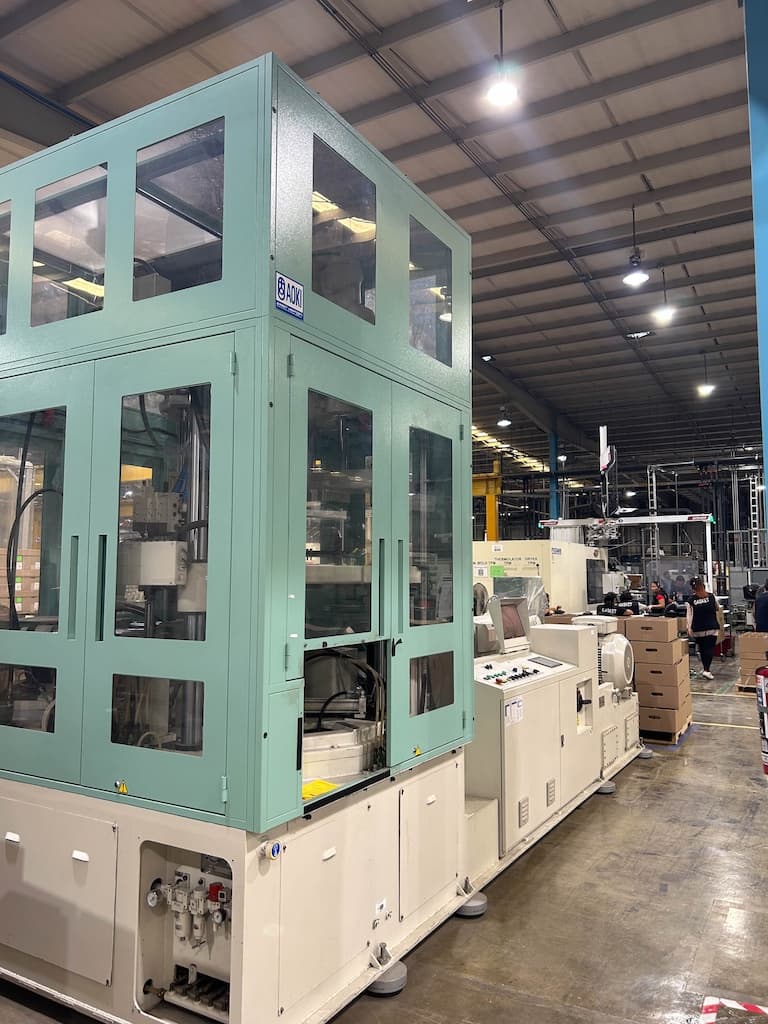


Need Help Finding the Right Equipment?
Contact our team with your specifications and we'll help you find the right machine.
