Used Twin Screw Extruders for Sale
All used plastic extruders & extrusion equipment (14) →
See all 14 Extruders & Extrusion Lines →
Recently sold
 SOLD
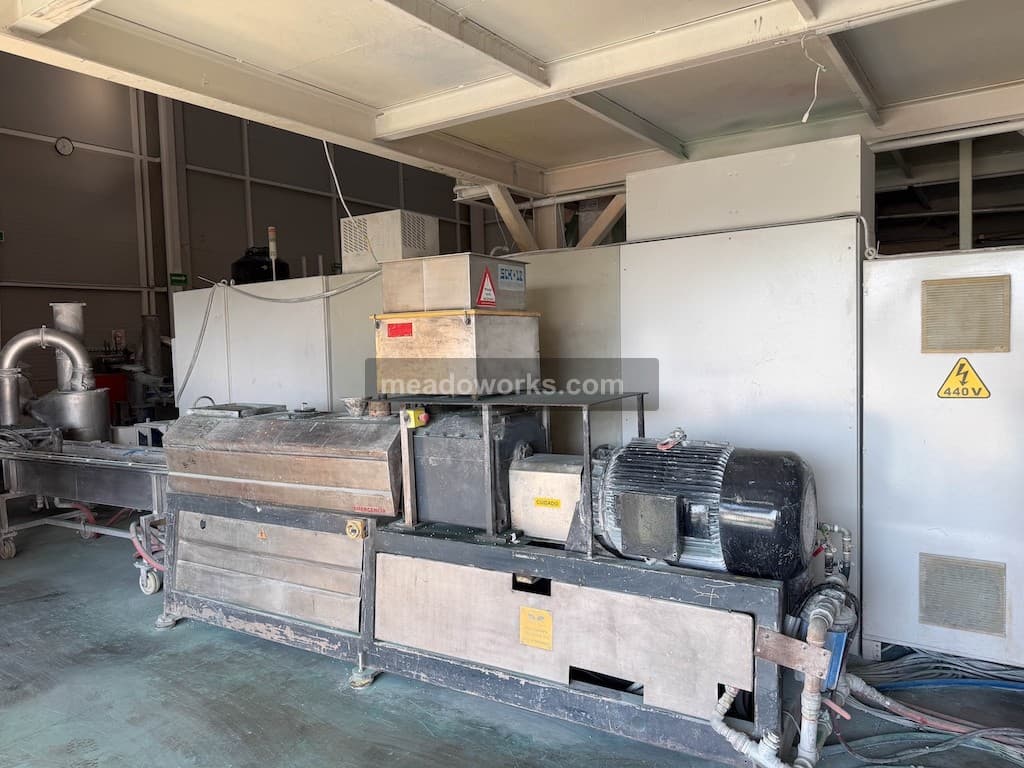
Item #6018
Rockstedt DWE 55/2 Twin Screw Compounding Line
Mexico
 SOLD
Item #5853
2018 Coperion STS50 Mc11
Mexico
 SOLD
Item #5854
2008 Coperion ZSK 50MC
Mexico
 SOLD
Item #4062
1997 Coperion ZSK58 MC - Compounding Line
USA
 SOLD
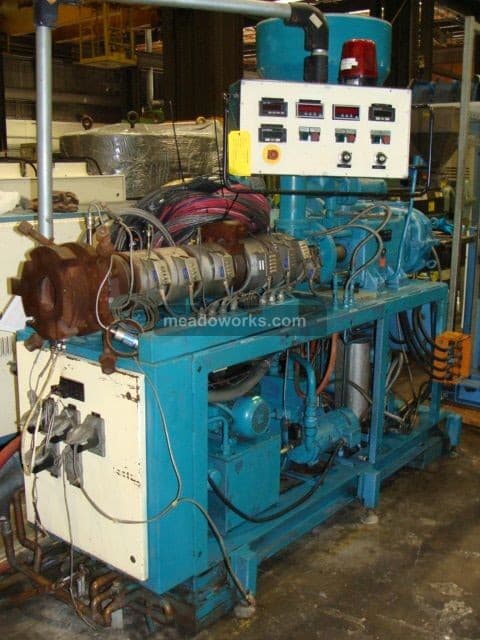
Item #1968
1987 Krauss Maffei KMD 2-50KK Twin Screw Counter Rotating
USA
 SOLD
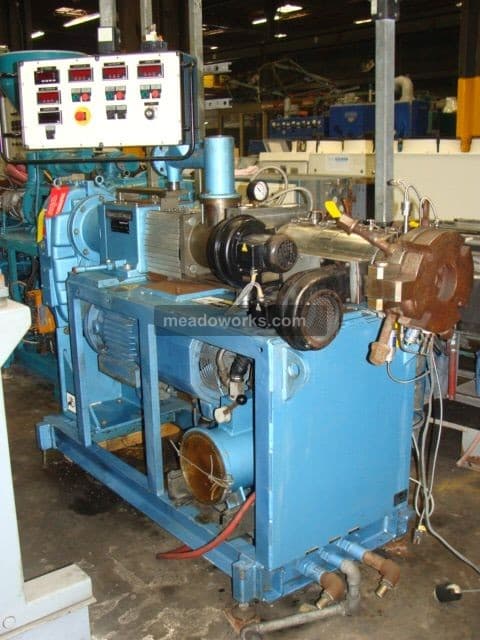
Item #1967
1996 Krauss Maffei KMD 2-40KK Twin Screw Counter Rotating
USA
Twin Screw Extruders by the numbers
From our own catalog: machines listed now and machines we have sold. Updated every few minutes.
Looking for Something Specific?
Most of our inventory sells before we can list it online. If you need a specific brand, model, or specification, tell us what you need—we have access to unlisted equipment and machines coming in from plant closures.
Looking to Sell?
Meadoworks is an active cash buyer of used industrial equipment. Get a free valuation from our AMEA-certified appraisers.
About Used Twin Screw Extruders
A twin screw extruder runs two screws side by side in a figure-eight barrel. That geometry gives far more control over mixing than a single screw, which is why twins do the compounding work in plastics: adding filler, glass fiber, color concentrate, flame retardant or a second polymer, then venting off moisture and volatiles before the melt reaches the die.
There are two main kinds. Co-rotating intermeshing machines, such as the Coperion ZSK, Leistritz ZSE and Berstorff ZE series, turn both screws the same way at high speed. They are the standard compounding and masterbatch machine and are built from screw elements and barrel sections that can be rearranged for each recipe. Counter-rotating machines, such as the Krauss Maffei KMD series, turn the screws in opposite directions at low speed. They act more like a positive pump and are used mainly for rigid PVC pipe, profile and sheet from powder dry blend.
When you buy a used twin screw extruder, the screw diameter and the length-to-diameter ratio tell you the size and what the process section can do. A 25 mm machine is a laboratory or pilot extruder; 50 to 60 mm machines are common production compounders. Torque and the gearbox rating matter as much as diameter, because a high-torque gearbox lets the same size machine run filled and glass-reinforced compounds at higher output.
Our record runs from a Berstorff ZE 25 with a 44:1 L/D and vacuum venting to a Leistritz ZSE 60 GL-36D, with Coperion ZSK 50 MC and ZSK 58 MC compounding lines, a Coperion STS50 Mc11, a Rockstedt DWE 55/2 line and Krauss Maffei KMD 2-40 and KMD 2-50 counter-rotating machines.
Meadoworks sells these machines from compounders, masterbatch plants and processors that compounded in-house. A compounding line often includes the feeders, strand bath or underwater pelletizer and vacuum system, so ask what is part of the sale. We can show the screw configuration and the barrel layout before you buy, and the screw shafts and elements usually ship with the machine. Rigging is coordinated with the feeders and the pelletizer so the line arrives together.
How to Choose a Used Twin Screw Extruder
Co-Rotating or Counter-Rotating
Choose co-rotating for compounding, masterbatch, filled and reinforced materials, reactive extrusion and devolatilizing. Choose counter-rotating for rigid PVC pipe, profile and sheet made from dry blend, where gentle, pump-like conveying matters more than mixing.
Then size by output and torque. Ask for the gearbox torque rating, the motor power and the screw speed, not just the diameter. A 50 mm machine with a high-torque gearbox can outrun an older 58 mm machine on a filled compound.
By Size: Used Price Ranges
Laboratory and pilot twins (about 18–30 mm): about $30,000–$80,000.
Production compounders (about 40–60 mm): about $60,000–$250,000, more with feeders and a pelletizer.
Large compounding lines (70 mm and up) with full downstream: about $200,000–$500,000+.
What moves the price: model year, gearbox torque, screw and barrel wear, how many screw elements and barrel sections come with it, and the feeders and pelletizer in the sale. These are typical used-market ranges, not a quote on any one machine. For a current price, request a quote or call 800-323-0307.
Twin Screw Extruder Specs to Compare
| Spec | Typical range | Why it matters |
|---|---|---|
| Screw diameter | About 25–60 mm on the machines we have handled | Sets the size class and output. |
| L/D ratio | About 36:1–44:1 on our compounders | Longer barrels add room for feeding, mixing and venting zones. |
| Rotation | Co-rotating for compounding; counter-rotating for rigid PVC from dry blend. | |
| Gearbox torque | Decides how much filled or reinforced material the machine can push. | |
| Vents and side feeders | Vacuum vents remove moisture and volatiles; side feeders add glass and filler. | |
| Voltage | Usually 460V three-phase | Match it to your plant service before you buy. |
Screw diameter
Typical range: About 25–60 mm on the machines we have handled
Sets the size class and output.
L/D ratio
Typical range: About 36:1–44:1 on our compounders
Longer barrels add room for feeding, mixing and venting zones.
Rotation
Co-rotating for compounding; counter-rotating for rigid PVC from dry blend.
Gearbox torque
Decides how much filled or reinforced material the machine can push.
Vents and side feeders
Vacuum vents remove moisture and volatiles; side feeders add glass and filler.
Voltage
Typical range: Usually 460V three-phase
Match it to your plant service before you buy.
What to Inspect on a Used Twin Screw Extruder
Pull and measure the screws
Check element wear and the shaft splines; ask for the screw configuration drawing.
Inspect the barrel bore
Wear between the screws and the barrel cuts mixing and output.
Run the gearbox
Listen under load, check the oil and ask about the last service on the thrust bearing.
Check heating and cooling
Every barrel zone should heat and cool on command.
Test the vacuum vent
The pump, the vent port and the seals should hold vacuum.
Count the spare elements
Extra kneading blocks and barrel sections let you change recipes.
Confirm feeders and pelletizer
Gravimetric feeders, strand bath or underwater pelletizer, and their controls.
Related Equipment
- Pelletizing Lines
Strand and underwater pelletizing after the extruder
- Pipe & Profile Extrusion Lines
Complete lines for pipe, tubing and profiles
- Single Screw Extruders
For straight extrusion of pellets
- Lab & Pilot Extruders
Small machines for samples and trials
More Extruders & Extrusion Lines types
Twin Screw Extruders Brands We've Sold
Coperion
ZSK co-rotating compounding lines
Krauss Maffei
KMD counter-rotating twin screws
Leistritz
ZSE co-rotating extruders
Berstorff
ZE laboratory and production twins
Rockstedt
Twin screw compounding lines
Common Applications
Frequently Asked Questions
What is a twin screw extruder used for?
Mostly compounding: mixing resin with filler, glass fiber, color, additives or another polymer, venting off moisture and volatiles, and pumping the melt to a pelletizer. Co-rotating twins are the standard compounding and masterbatch machine. Counter-rotating twins are used mainly for rigid PVC pipe, profile and sheet made from powder dry blend. Single screws handle most straight extrusion of pellets into pipe, film or sheet, where heavy mixing is not needed.
What does L/D ratio mean on a compounding extruder?
It is the barrel length divided by the screw diameter. A 44:1 machine has a barrel 44 times as long as the screw is wide. More length gives room for separate feeding, melting, mixing, venting and pumping zones, which matters for filled compounds and devolatilizing. A short barrel can still compound, but with fewer places to add side feeders or vents. When comparing machines, look at L/D together with the barrel layout, not as a single number.
Can I change the screw configuration on a used compounder?
On a segmented co-rotating machine, yes. The screws are built from conveying, kneading and mixing elements slid onto splined shafts, and the barrel is made of sections that can be rearranged. That is why the spare elements and barrel sections that come with a used machine add real value. Ask for the current configuration drawing and the list of spare elements, and check the shafts and splines for wear before you plan a new recipe.
What size twin screw do I need for production?
Size it by the output you need on your hardest material, then check torque. Laboratory and pilot machines in the 18 to 30 mm range make samples and small runs. Many production compounders run 40 to 60 mm screws, and large masterbatch and resin plants go to 70 mm and beyond. A high-torque gearbox lets a smaller machine run filled compounds faster, so compare torque and motor power, not only the screw diameter.
Does a used compounding line include the pelletizer?
Sometimes. A complete line can include gravimetric feeders, the extruder, a strand bath and strand pelletizer or an underwater pelletizer, a dryer and a classifier. A machine sold alone may have only the extruder and its control. Ask exactly which pieces are part of the sale and whether they ran together. Matching a pelletizer to an extruder later is possible, but it adds a second purchase and setup time before the first pellet.
